Showing posts with label MiddleEast. Show all posts

Monday, January 11, 2010

Orlando Figes

Night Life in Beirute...

Some photos taken with a NOKIA E-71 during incursions into the BO18 and the MusicHall... Reminded one of Moscow nights, maybe the blend of "East" and "West", but from distinct approach angles. Moscovites are Westerners influenced by the (Central Asian)East, Beyrouthins are (Middle)Easterners influenced by the West.


Posted by Picasa

Thursday, December 11, 2008

Nedjma

Posted by Picasa


A Muslim female friend first told me about this book... Frank self-awareness of sexuality in an autobiographical book by a Muslim female author must be rather difficult to swallow in some a-tolerant quarters...

Sunday, November 30, 2008

Avraham Burg


Posted by Picasa


The launching of the English edition of a controversial book, at the Pasha Room in the American Colony Hotel. This blogger of yours has read half the book already and keeps thinking "If only 51% of the Israeli electorate would share the insights of Mr Burg the prospects for Peace in the area would be brighter indeed".

Saturday, July 21, 2007

Thursday, January 18, 2007

Gaston Hochar

Bekaah Reds instead of Beirute Blues...


A must have for wine lovers that defend biodiversity...


What Lebanese stories outside pure politics would help in making three-dimensional the conflict around the possession of the margins of the Litani River? Perhaps the epic tale of the wines of Gaston Hochar, from Chateau Musar, the Lebanese “Grand Cru”? With vineyards in the Bekaah Valley almost contiguous to the front lines, the continuity of that wine is an elegy to the Lebanese determination to move on. The ardour of the battles in 1983 right in harvest time made the oenologist son, Serge, to infiltrate clandestinely into their own properties to lead the vintage campaign. The family’s wine stronghold, the Ghazir Castle, was several times hit by artillery fire. There were even times when the caves of the winery had “dual-use”, employed to stock the barrels alright but also to serve as an improvised bunker for the near-panicking local population against bombardments. Can one “understand” the Bordeaux area never having tasted a Grand Cru? Isn’t it the case that each time I’m quietly enjoying a bottle of Château Musar I’m advancing an extra bit in the understanding of Lebanon? To make wine in the Arab world is always a sensible issue, and to have the arrogance to produce it according to classical canon, the French way, is quintessential Lebanese. It has something of transgression of the Coranic consuetudinary but also of a tongue-in-cheek challenging of European patronizing ways. It’s a wine one drinks with political enjoyment, so to speak. (I cherish the memory of the bottle of a 1967 I’ve opened this Summer to honour the cessation of hostilities on the way to a cease-fire).

Tuesday, January 16, 2007

James Baker III

The Unbearable Hardness of the Peace Process...


A two-days conference on "Madrid Fifteen Years Later" at the Intercontinental, in the Castellana. Felt like going back in time, indeed. As Hanan Ashrawi said in her intervention, with a microscopic hint of self-consciousness: "we are older, hopefuly the wiser.. with a certain amount of cynicism .. but still very much engaged and commited to move things further.."
I managed to flash my older, wiser (more cynical) self to a number of carefuly selected attendants, including la Ashrawi herself. Later, back in my office, I flex the muscles of my keyboard-typing fingers, reporting my impressions. Felt good to be back in business.
I realize I'm still very much engaged and commited to move things further.

Tuesday, January 09, 2007

Robert Fisk

Falling for the Middle East thing...


When one compares ones's written notes ( a Journal, rather) with the notes taken at the same epoch by a Middle East Correspondent about the very same portentous issues, some curious vibes are detected.

Having recognized the credibility of his views regarding my own times on that conflict theatre I have to trust him about the period I was no longer there. Like in Fundamental Science, one's objectivity in 'peaceprocessology' is crucial but very hard indeed to keep. You don't have to agree with Fisk's viewpoint at every step of the way but you can recognize an honest atempt at objectivity when you see one. A clearly commendable book.

Friday, December 15, 2006

Lord Kitchener

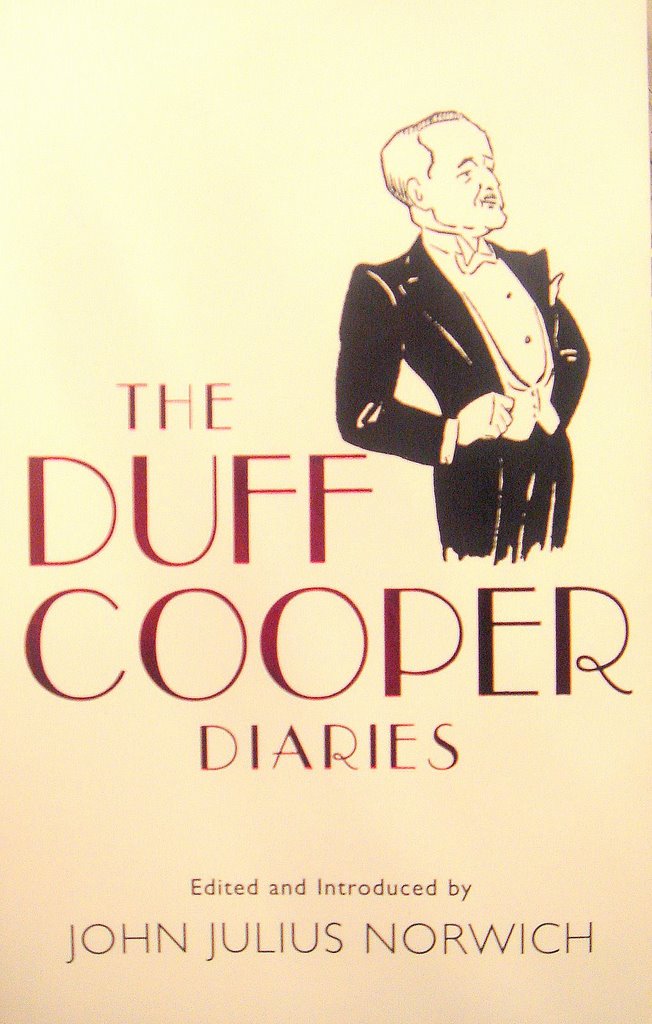
Classical diplomatic stuff, courtesy Duff Coopper, Esq.


Of all the books this blogger of yours bought in Cambridge University territory while awaiting patiently the end of a daughterly interviewing process, the "Duff Cooper Diaries" is the real treat. Duff Cooper is the very epithome of the diplomat-as-witness-of-History-in-the-making. Plus, he was a top class lady-izer, a sybarite and a charming fellow. As a metaphorical carrot that will make the Right Honourable Reader run to his nearest amazon.com site, I'm considering quoting a couple of nuggets of the said diaries.
Think of today's Mesopotamia (Irak) and just enjoy this entry:


July 11, 1916

(…) Dined at 10 Downing Street (…) At first I felt very uncomfortable , alone with three Cabinet Ministers who I feared would say things I should not hear. But they seem quite unaware of my presence. The talked about the campaign in Mesopotamia. The mismanagement they said was all due to (…) .The decision to attempt the capture of Baghdad was entirely due to the military experts. Kitchener said that we might take it but couldn’t hold it. Even so he thought it worth doing from a political point of view. Curzon said: “Don’t take it unless you can hold it”.. (…)
Deliciously ironical, no?...

Monday, December 11, 2006

Saturday, December 09, 2006

Paul of Tarsus

On the road to Damascus, Syrian Deligts...


A user of the services provided by the workplace of this blogger of yours decided to offer a token of his appreciation for the way he was treated. A chocolate-box, a tray of custar-pies, a Christmas Cake wrapped in Christmas-red: all that we've seen before. But baclava from Damascus? Well worth to blog about it...

Friday, November 24, 2006

Pierre Gemayel

Bikfaya revisited...


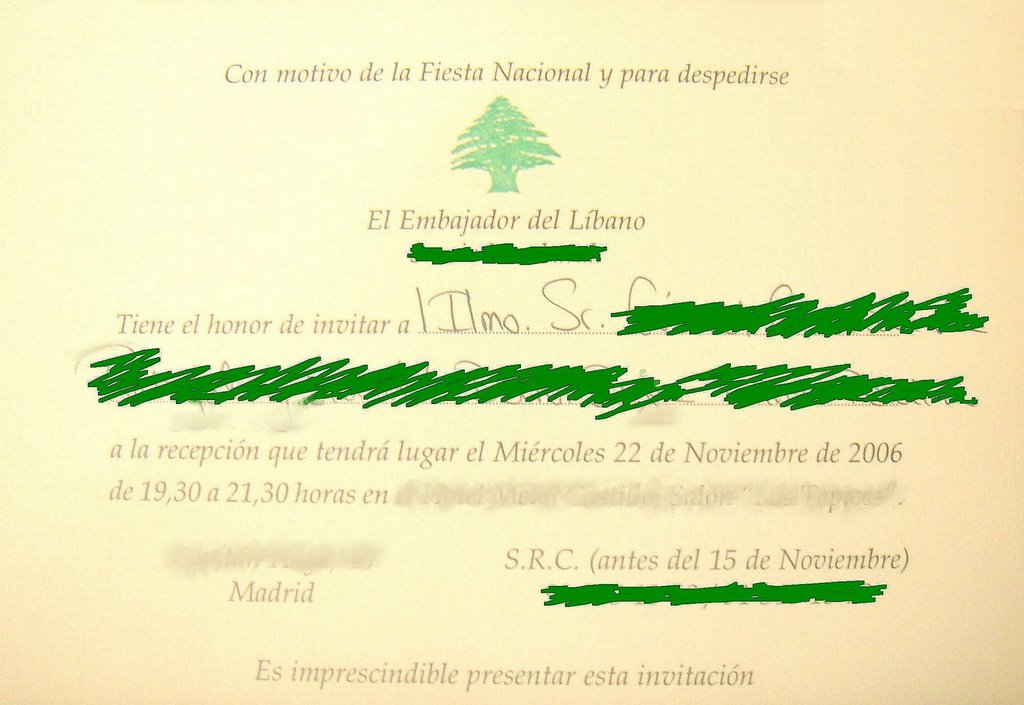
Yesterday, at mid-morning, I’m informed that the cocktail of the National Day of Lebanon, due to take place that same day, was cancelled. I was expecting that, in fact. Beirut was in serious political turmoil with the assassination of Pierre Gemayel. And in mourning too.

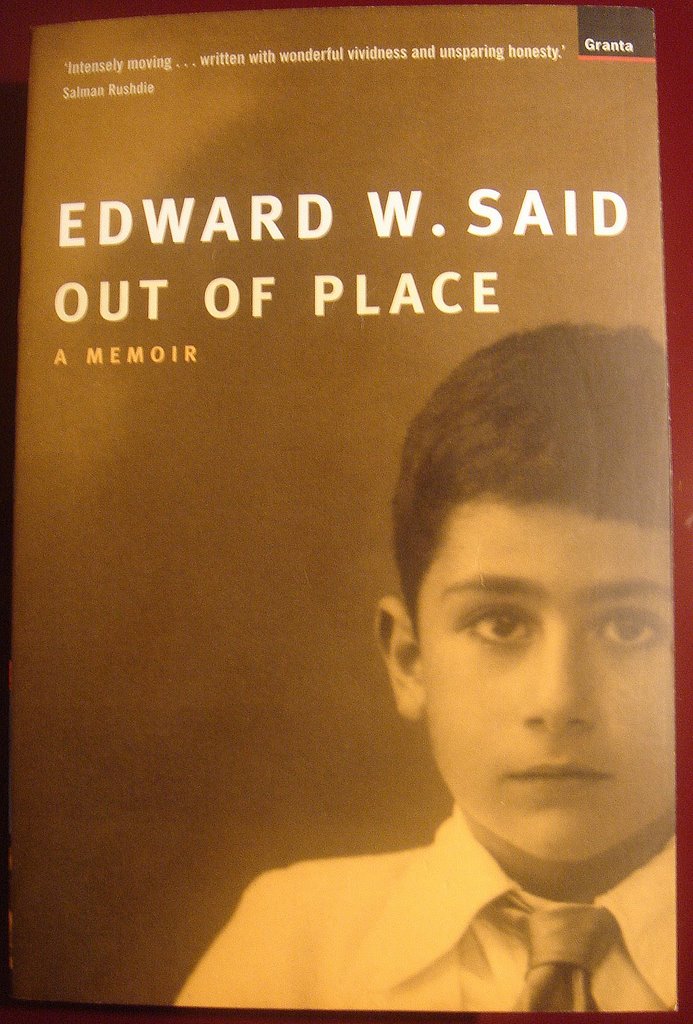
When I heard about the funeral in Bifkaya, the stronghold of the Gemayels, I remember to have read a reference to that village in Edward Said’s memoir (“Out of Place”). All was still very fresh in my head, since it was just last week I’ve finished reading it. There, I found it:

“In the early days, there was often a decrease in the number of cars as we climbed the dramatically hair-pinned road to Bifkaya, the large town just below Dhour that I knew for its famous peaches and a fantastic red-and-tinsel-colored toy shop, “Kaiser Amer”. It was only later, in the 1970s, that I knew it as the family seat of the Gemayel family. Pierre Gemayel., impressed with the German black-shirts he saw at 1936 Olympics, was the founder of the extreme-right Maronite party, the Phalanges Libanaises, and was father of two Lebanese presidents - Bashir, whose assassination in September 1982 unleashed the massacre at the Sabra and Shatila Palestinian refugee camp perpetuated by his pro-Israel henchmen, and Amin, who ran a regime drenched in corruption and incompetence. Bifkaya then acquired a sinister reputation as rabidly anti-Palestinian, and I have avoided it and Dhour for almost two decades”.

Said, a Liberal (in American political lexicon) and a Left-wing scholar (in European labeling) had the right to his own, Palestine-oriented, view-point. His positions ilustrate a point I'm very keen on: Political History is never in Black and White - or "Red" and "White" (Krasnii vs Bielii in Revolutionary Russia; or "Red" and "Black" (in the 20s and 30s in Italy and Spain). Everything is so much more complex than the “Us and Them”.

Let us bear that in mind before we rush to quick conclusions about the whodunit in the case of the more recent political murder in Lebanon...

Wednesday, November 22, 2006

Edward Said

Ramallah Diaries in all sorts and shapes...


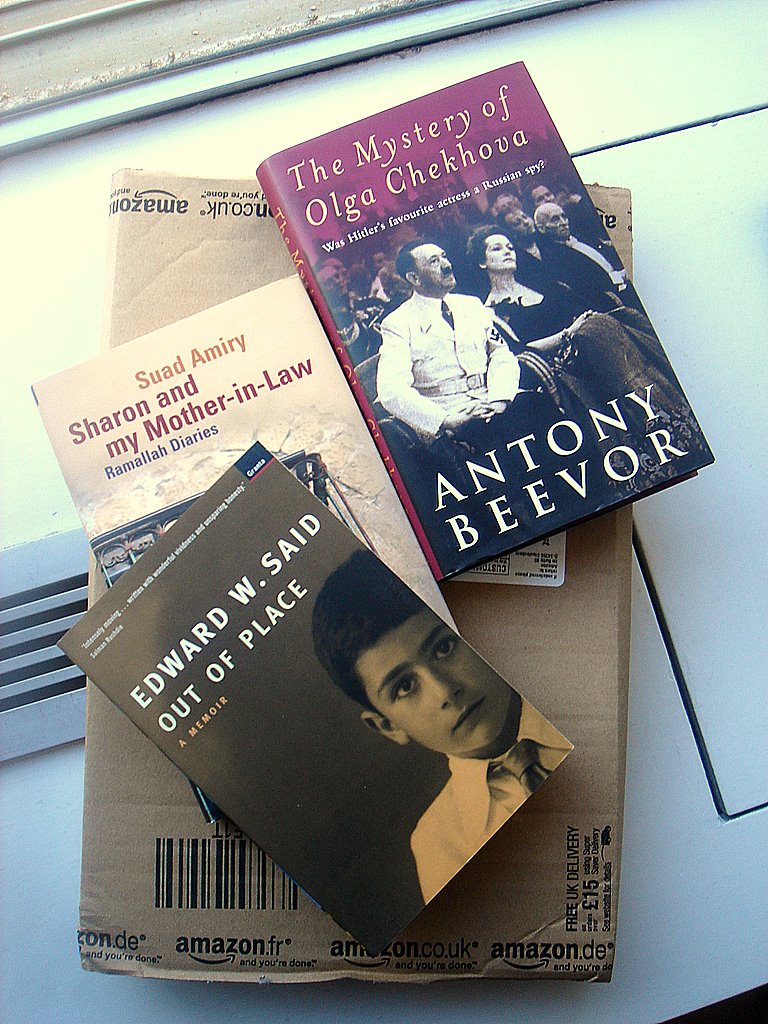
"Out of Place - A Memoir" by Edward Said. If one has to read one non-fiction book about Arab-British P-2-P (people to people) interaction in pre-1948 Palestine, this is the one. The Proustian-like recalling of school days is a very powerful sub-genre of quasi-biographycal literature. If done with honesty and frankness it's like a psychoanalitical key to the author's positions and ideology. Not that what we are or what we defend is a crude result of our chidhood troubles as seen through the spectacles of Professor Freud . But it helps to explain (to ourselves and to third parties) some of the emphasis we choose to put in our discourse. The emotional underscoring, so to speak, of one's political bettings.

I read Said's auto-bio back to back with another book (" Sharon And My Mother-in-Law - Ramallah Diaries") by another American-educated Palestinian, this time centered on Ramallah during the the Second Intifada. Ms Suad Amiry is an eloquent example of the smiling gentle hard-nut toughness of women who have to deal with politics. This blogger of yours is a social machista by geographical birth but a born-again political feminist after experiencing how crucial the contribution of women can be in changing things and societies for the better..

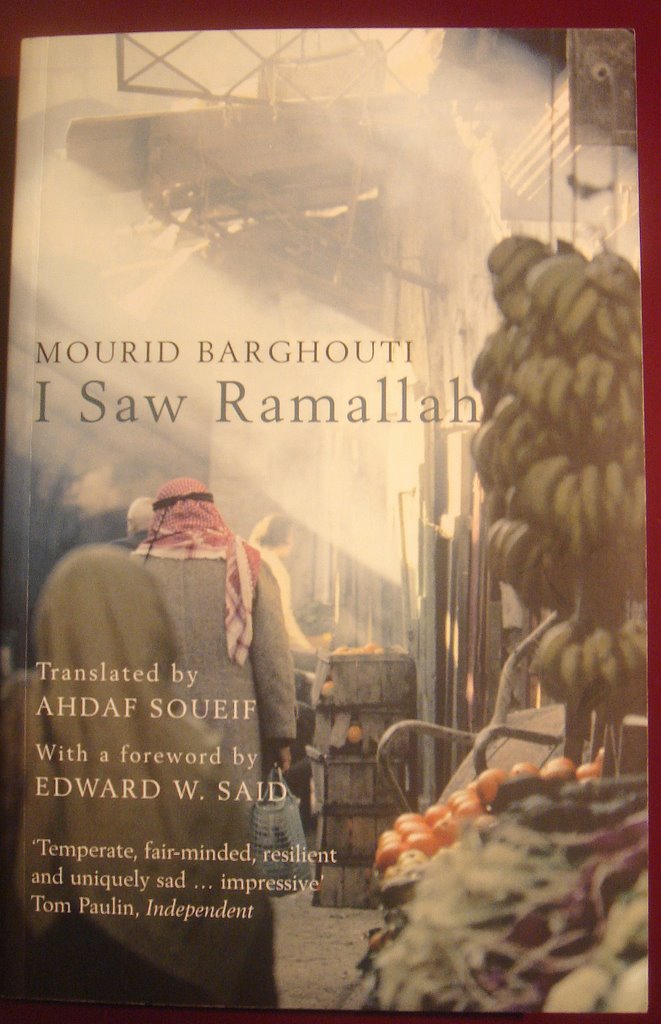
That takes me to a third book, "I Saw Ramallah" by Mourid Barghhouti, about which I've blogtexted about last year. http://praiagrande.blogspot.com/2005/05/mourid-barghouti.html


A nice Tercet of Palestinian Chamber Literary-Music...

Monday, November 13, 2006

Olga Chekhova


With amazon.co.uk everyday can be Xmas...


Delivered this morning, fresh from the on-line bookshop...

Posted by Picasa

Monday, October 30, 2006

Gamal Abdel Nasser

Happy 50th Anniversary Suez Crisis !


1956 is a date this blogger of yours most cherishes for obvious reasons. There were plenty of very eventful developments on that year, although I allways felt a bit let down because not one single Port wine House declared a Vintage in 56. The two obvious political iconic dates are Budapest and Suez. History will confirm their particular relevance .

The Suez Crisis has been a favorite of the British media for ages. The masochistic trait in Britishness is evident in all that salt being rubbed in the wound of the vanishing Empire. A détour here, please.. During my London times I witnessed Black Wednesday when the Pound was flushed out of the Exchange Rate Mechanism by the tsunami of the currency markets (only Soros could surf those waves...). Why am I telling this? Well, at the time of the débacle of the Pound a precedent was invoked for this drama of seeing Her Majesty's Government surrendering to the Markets. Suez, you guessed right. It was the catastrophic fall of the British Pound that ultimately convinced Anthony Eden that the game was over.. One should return to Suez from time to time...

Of all that I've read about Suez at 50 I particularly like what Samia Serageldin ("The Cairo House") wrote the other day in her blog http://www.thecairohouse.com/blog/ : "The fiftieth anniversary of the Suez crisis was marked by the media worldwide, with some essays more thoughtful than others. My father had just turned thirty years old in October 1956, when Egypt was attacked by Israeli, French and British forces. Nasser's 1952 coup d'etat had stripped him and his class of landowners of their property, and his oldest brother, a politician and party leader, had been tried and condemned to death (later freed) as ancien regime enemy of the people. It might have been reasonable to assume that a man in my father's position would have welcomed, or at least stayed neutral about, the foreign invasion that promised to topple Nasser's regime and return the status quo ante. He did nothing of the sort: he took his family to the safety of the countryside, and returned to Cairo to volunteer for the civil defense. That's human nature: when your country is invaded, you close ranks. That is one of the lessons of Suez, perhaps, that it would have been well to remember three years ago. Along with this: Suez made Nasser a hero, not to my father, but to the vast majority of Arabs."

Washington Irving


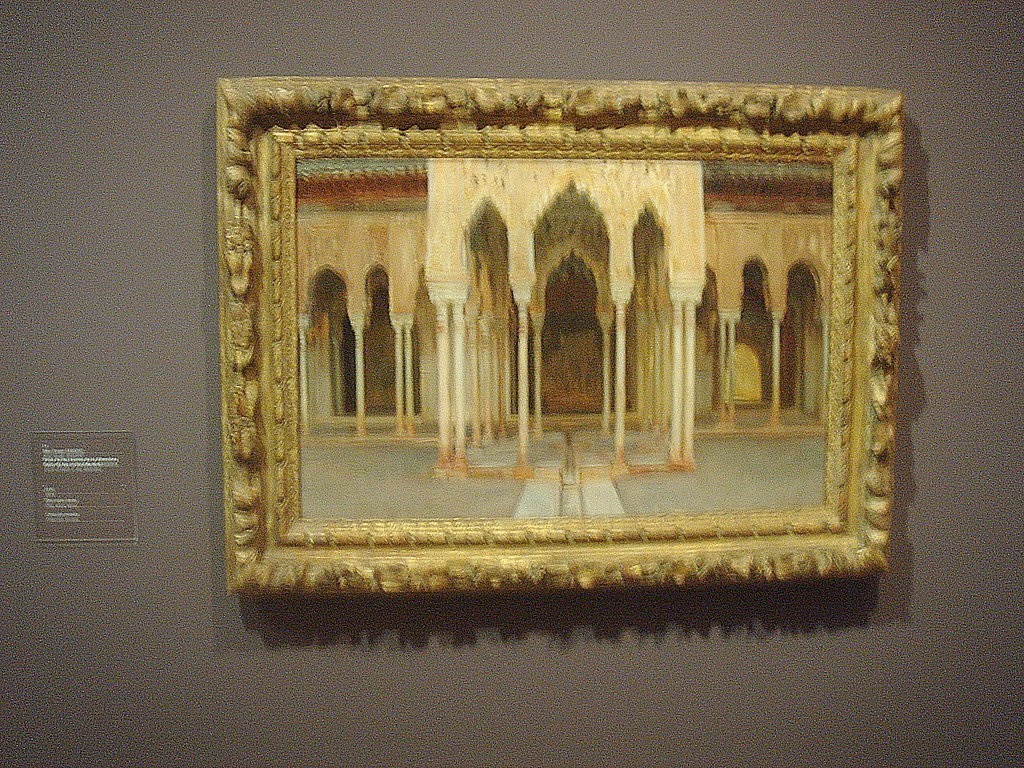
The shade of the frame of this J.S. Sargent ("Court of Myrtles in The Alhambra")
has the same arabesque motiv of the depicted architecture itsef...

Wednesday, May 10, 2006

David Fromkin

"1922" was a crucial historical "nodule" ...


There’s too much information out there. Better to stick to a few areas, and among them to a few themes, and then, alright, be thorough, be deep.

Malinka liked my “nodules” concept for a crash course on world history and wants me to elaborate on that. I longed for a similar request from the Right Honourable Reader but to no avail.

To acquire historical knowledge from A to Z is rather tiresome if not physically impossible (considering the average life expectancy of the Homo sapiens). Instead of starting with the Neanderthal, progressing to Oriental and Classical Antiquity, and from there to the European heirs of Rome until this day and age of evil-axis metaphors and near-non-Nonproliferators an alternative methodology might be on order. Less time-consuming and, intellectually-speaking, much more rewarding.

All bores quote themselves and I will have to conform with norm: “I believe in a kind of 'quanta' or Darwinian evolutionary History. More important than a slow chronological flux are some crucial "nodules". I mean by that historical short periods which have critical mass of data, revolutionary energy and political "pathos" (either drama or tragic-comedy) enough to carry us - in a quantum-like leap - into new times.”


I have also bored stiff the Right Honourable Reader enough times already with some of my favourite A-list “nodules”. A good example is the Russian Revolution one, which I could label, to simplify, “1917”. If one tries hard to understand “1917” almost every single political development in XX Century, from Marx to Fukuyama, becomes intelligible. Worth some studying then.


What other “nodules” in the Rosary of History are worth a particular investment, bearing in mind one’s scarce resources of Time, Intelligence and energy? As it is impossible to achieve wisdom on every significant crossroad of the History of men, each one of us chooses personally a couple of “nodules” to occupy his free moments of an otherwise full-agenda hyper-busy day-to-day life.

Those choices are sometimes dictated by professional interest. When I was trying to figure out, while watching successive sunsets in Jaffa, what was the Israeli-Arab conflict all about, I had to concentrate in “1922” (the Versailles arrangement for a semi post-colonial Middle East). For that Professor Fromkin's book (depicted above) was outstanding. I obviously had also to dive into “1948-69-73" and in “1956” too (yes, the demise of British Imperial Power in Suez is a nodule worth studying.. ).

Some times our choices are just guided by our patriotic personal inclinations. A Christian, in a way, is always returning to the nodule “1 to 33 A.D.”.. A French nostalgic of Napoleonic Imperial Grandeur to “1812” – and to achieve full understanding of Waterloo he will have to end up, as all Frenchmen do, in “1789”.. In the westernmost Peninsula of Europe where I was born, “1492” and “1500, plus or minus a couple of decades” are still obsessively revisited.

Some choices for “nodular” historical research are biography-led, though. As I blogged about recently (boring self-quoting activity again): “In each “nodule” there are illuminating biographical case-studies. Among these particular revealing biographies, as code-breakers to certain periods of history, I’ve always had a fascination for gentlemen who incurred in many risks to protect their individual freedoms and beliefs (…) “ . What produces a Free Spirit? What is so precious about Individual Freedom that turns the rise of Freedom in Society into an almost secondary phenomenon? What makes one admire an atheist among a bigot religious society, or a believer in an atheistic regime, more than the glorious struggle of the Masses? Why would one rather fall for Casanova than for Marx? Why will one always tend to prefer Pasternak to Gorky? And what contributes more to the loosen up of strict hypocritical sexual morals, a rebellious serial seducer like Lord Rochester or the Kinsley Report?

- Will this do, Madam?

Tuesday, April 18, 2006

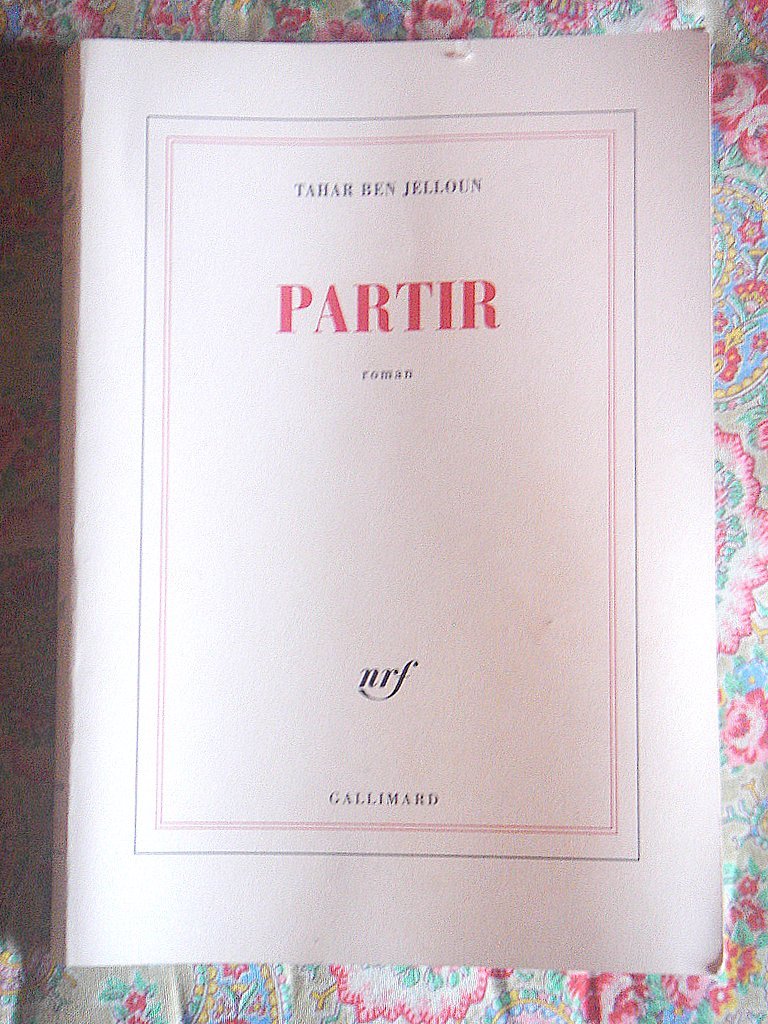
Tahar Ben Jelloun

For next time you drink mint-tea...


No glamorous expats here...
Reading this book should be mandatory for anyone who tries to understand this crucial phenomenon in today's Europe of large fluxes of Maghreb immigration. Literature is not Sociology, nor a collection of fictional biographic vignettes can replace statistical analysis, but for the human dimension of what it means to try to reach our shores this book is a precious jewel.
The desperation to quit the Moroccan soil experienced by the youth spending time in the cafés of Tangiers fantasizing about "burning" those last 14 kilometers that separates them from Spain is something that has no longer anything in common with the natural wish we all share for a better life. If you are not touched or moved with the lives depicted here you are ready to vote for the latest Lepenist variant.
Tangiers is not only Paul Bowles, nor William Burroughs, nor Peggy Guggenheim or Malcolm Forbes parties. Neither necessarily only Tahar Ben Jelloun's view-point. But you have to keep your mind open for both faces of the RichWest/North-meets-PoorEast/South coin or everything will become simplistic, crude, de-humanised.
Morocco (in the Tangiers-Marrakesh-Essaouira axis) is not just the exotic playground for expats (sometimes with sad sexual-tourism connotations, as the book depicts too). There is also an internal reality for the local inhabitants to deal with between themselves that TBJ does not try to evade. (It's easy to blame the globalization or the infidels for all the troubles..)
This blogger of yours is not an idealistic "naïf" and takes seriously the need for visas and for policies, in both shores of the Mediterranean, to deal with migration pressures. But one needs books like this from time to time to prevent our hearts to become sclerotic and stone-like..

Monday, April 10, 2006

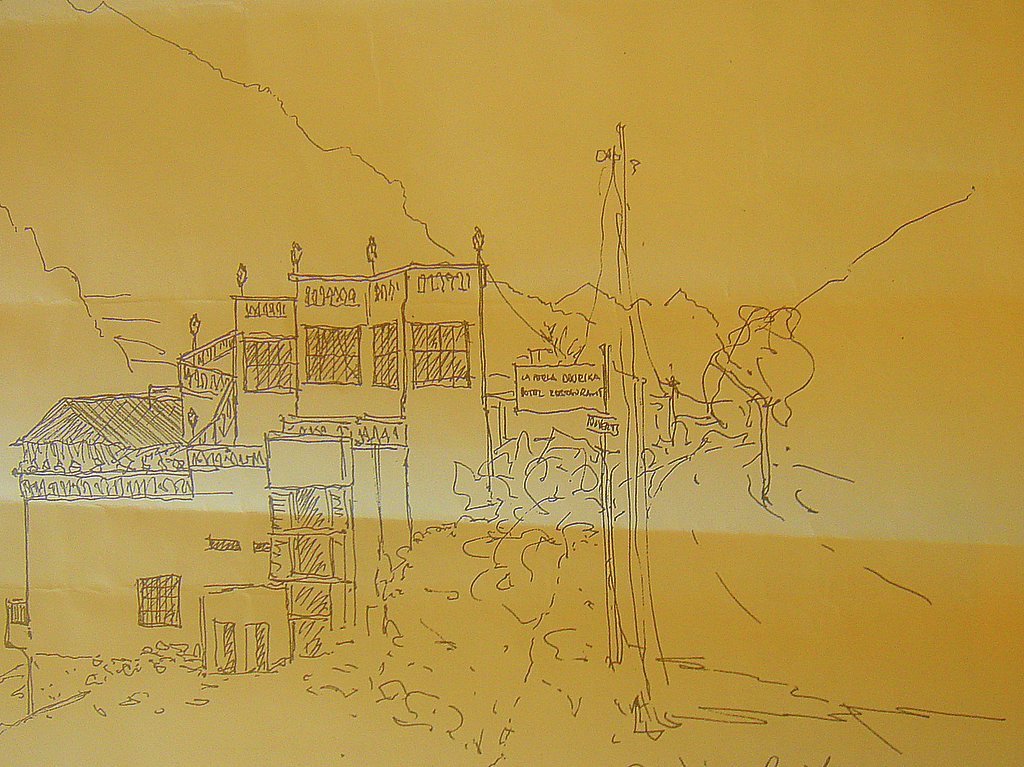
Ammaria Mounassib


Ammaria est la Directrice de "La Perle d'Ourika", un hôtel-restaurant au km 58 de la route que, partant de Marrakech, s'engage dans l'Atlas voisin. C'est au Début Setti Fatma, dans la vallée de L'Ourika. Elle m'a offert des dattes et a fait un voeux.. Inch Allah!
 Posted by Picasa

Friday, April 07, 2006

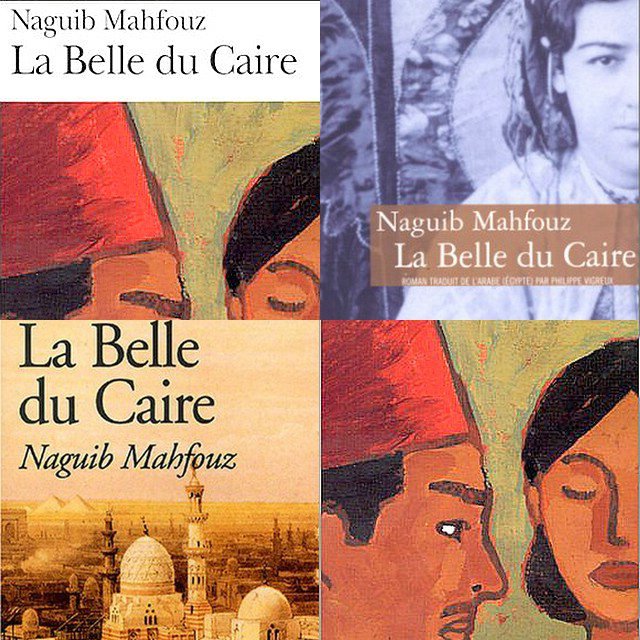
Naguib Mahfouz


Insider's view on what was pre-Nasser Cairo life really like..


One of the books I indulged while laying by the colonnaded pool at the Rhoul Palace, in a peaceful Nirvana-like hot afternoon in Marrakesh, was Mahfouz' "La Belle du Caire". In this respect I have to confess to the Right Honourable Reader that this blogger of yours has in department of Literature-in-Fancy-Places been moving slowly from Western Imperialist to Orientalist and more recently to Anti-colonialist. I will explain myself in a second.

Take enormously exotic places with palm trees, decadent enough and with huge romantic appeal: what names present themselves to one's memory? Tangiers? Right. Casablanca? Fair enough. Cairo? For sure. Damascus? You bet. Alexandria? Right, fair enough, for sure and you bet. But from whom do we take our literary clues about those places? Paul Bowles and William Boroughs gave us beat-generation gay Tangiers. Murray Burnett, the play-writer of "Everybody comes to Rick's" , later re-named "Casablanca", served us spy & refugees Casablanca on a plate. Ondatje gave us the British war partying Cairo. T.H. Lawrence, "of Arabia", took us, with the help of David Lean, to a peterotoolish version of Damascus. Forster and Durrell moulded our Alexandria.

What have all those novels and fictional cities in common? Almost no aborigines. Mr Bowles might have had a Tangerine male lover and promoted the works of his friend but almost all the relevant characters on his novels are "European" ( a category that in the Imperial white world-view includes the Americans). Boroughs did just the same. "Casablanca" has not one Moroccan main role (although we have secondary characters of almost every European origin). Forster was in love when in Alexandria but could not persuade himself to write about it (in that case we would have had an Egyptian fellow immortalized). Durrell had at least the Hosnani family, you might remark. But they were Copts, and oh! so Europeanized.

My point is that we, novel-lovers, have come to acquire a biased view of those places. Cosmopolitan but strangely without almost any trace of representatives of the autochthonous population. Now, is this some kind of near-Marxist comment on the absence of the local proletariat? No, Sir! It's only that when one reads Maphouz (the Alexandria depicted in "Miramar", or the Cairo described in "La Belle du Caire") the city sounds so much more alive and authentic. All very nice but where are the Europeans in there? - the Right Honourable Reader might ask yourself with an ironical smirk. Point taken, but my plea is less fundamentalistic than you think. I propose that for each Anglo-Saxon Alexandria one should read an Egyptian Al-Yksandria. For each Foster a Malouf, for each Durrell a Edward al-Kahrrat, for each Lawrence a Souef or a Samia Serageldin.

Slowly the great Lit Cities will become four-dimensional, moving holograms of people of all complexions in landscapes with terracota walls, dusty alleys and reclined palm trees.


Wednesday, February 15, 2006

Cavanna

Freedom to enjoy cartoons...


satirical verses..


How come this blogger of yours who never fails to come up with a blogtext whenever any Arabia-related piece of news arises from the horizon is keeping his cards so scandalously close to his chest in this whole affair of the cartoons? That is a legitimate concern the Honourable Reader will not have failed to feel.
"Spin fatigue" might be the obvious answer. The patterns of reactions are so cosily arranged by now. The heavy artillery ( deep Huntington-related stuff) has been used. The media virgins defending freedom of expression at the top of their wailing voices have tear down their clothes. The rent-a-mob manipulators got their forty seconds of CNN prime time. (Even, Goodness Me!, the well intentioned Norwegian-dominated International Presence in Hebron - dear old TIPH with their ice-cream vendors' white overalls.. - had to resettle somewhere away from Al~Khalil !).
My Correspondent from Ramallah adopts a stoically note in her e-mails, no matter the closeness of live ammunition shots - and still I fail to decide myself to write about it.
And then "Charlie-Hebdo" gets itself involved and .. There!.. The urge to blog about a more than thirty two years-old story changes it all..
Has the Hounorable Reader any idea how was it possible for an engaged adolescent to read in Lisbon the forbidden "Charlie-Hebdo" before 25/4? "Charlie-Hebdo" could not be sold in Portugal before 1974 period. But there were ways to circumvent the authorities (which only proves the point that we were far away from a fascistic country, not withstanding the Leftist propaganda). A bookshop belonging to a enlightened bourgeois family, with democratic gentle-Left opposition credentials, did accept to forward subscriptions of forbidden publications. Acting like a mail box in a way. I was very proud, being 17 , of this semi-clandestine stuff. I was a subscriber of Charlie-Hebdo and felt that I too was making my small contribution to erode the berlinwall of Portugal's absence of freedom and democracy. Some of that satirical stuff was precisely what was needed to shake the un-cool grey world of these Woodstock-denial political authorities.
I had just recently fall for a new girl-friend, smart and posh, lovely eyes and almost Trotskyite. She lived not far way from the bookshop and was quite in awe with my underworld life of forbidden magazines. One day she offered to collect for me the latest copy. We met the following day, the lady-like smartly-dressed Plekhanov student carrying with her the folded magazine. She had used a silkish pink ribbon to give it an almost Valentine Day's note. (But there was no St Valentine in those times, not then). She was disguising a slightly embarrassed awkward feeling when she handed me over the folded "Charlie-Hebdo". I went through the pink ribbon and the folding stuff to have a look at the front page: a cartoon by Reiser with very obvious and vulgar hairy genitalia. So sweet of her, to overcome her upperclass gut disgust, and ideologically hardened with Rosa Luxembourg writings, proceed to wrap in girlish pink tones the magazine for her excitingly non-conforming boyfriend..
Would it not be great if, as we speak, a near adolescent couple of lovers, in Teheran or Amman, in Cairo or Gaza, were experiencing some similar story around a forbidden satirical magazine? Just a couple of years away from the advent of Freedom?