Showing posts with label Russia. Show all posts

Monday, January 11, 2010

Orlando Figes

Night Life in Beirute...

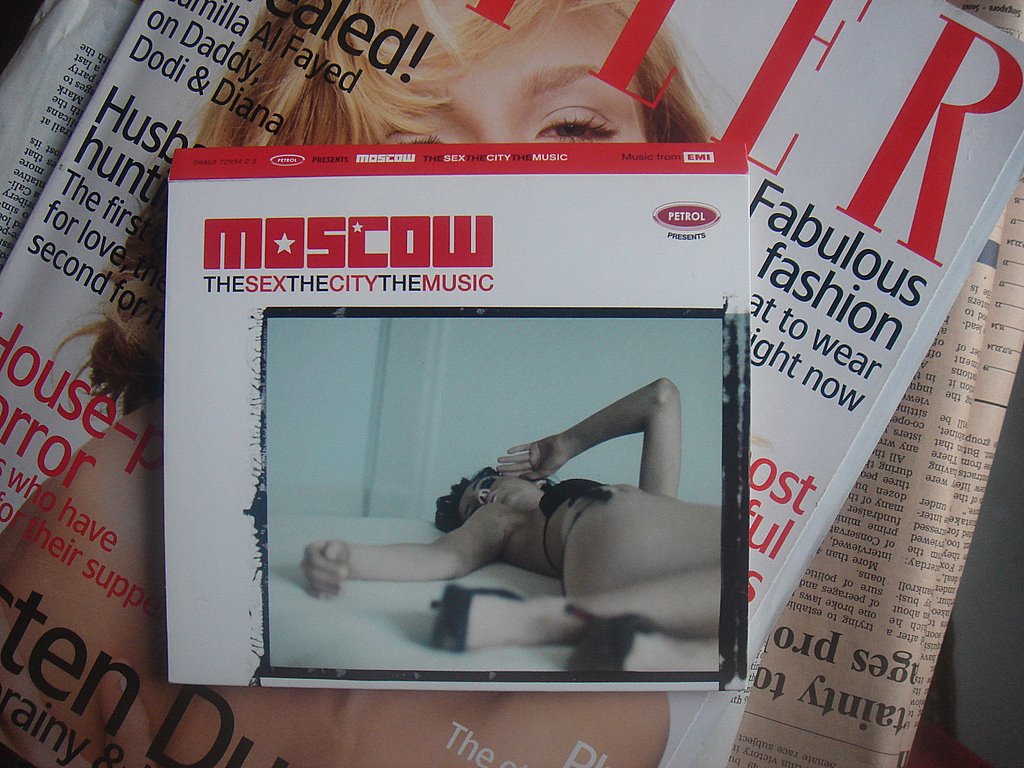
Some photos taken with a NOKIA E-71 during incursions into the BO18 and the MusicHall... Reminded one of Moscow nights, maybe the blend of "East" and "West", but from distinct approach angles. Moscovites are Westerners influenced by the (Central Asian)East, Beyrouthins are (Middle)Easterners influenced by the West.


Posted by Picasa

Saturday, July 21, 2007

Barbara Cartland


Not even the feverish imagination of a popular novelist would have come up with this one: a Russian girl from New York marries a Palestinian-British in East Jerusalem and arrives to the wedding by camel...

Tuesday, February 13, 2007

Alexander Vertinsky

Shanghai and the exile route of an White Russian...


Shanghai and its port area in the 1920's and the port of Vladivostok at the time of the White Russian débacle


This blogger of yours was fed in his adolescence by high quality Belgian and French comics (“Bande Déssinée” or BD). It turned into an addiction I cannot kick. A couple of years ago I was staying with a future Secretary of Defence during a stop-over in Paris, flying from Moscow to Lisbon. In the guest room I found myself surrounded by BD “albums” and I spent half the night indulging my habit. The five albums of the “Nuit Blanche” series, about the fate of a White Army cavalry officer after leaving Russia were fascinating. Paris, Odessa, Vladivostok, Shanghai, all the romantic and/or exotic places of White-Russianness were invited to the graphic novel. Only very recently I have managed to acquire, through google-research and Amazon-help, the entire series. “Les spectres du tsar”, “Le rossignol de Koursk”, “Agafia”, “Vladivostok” and “Shangaï”, all by Yann (script), Olivier Neuray (drawings) and Marianne Garnier (colouring).

An added bonus, when I compare notes with my recollection of that half-night in Paris, is that I had totally missed then the appearance of Alexander Vertinsky as a character in the “Vladivostok” album. Now, Vertinsky is a most fascinating Russian artist who has a extremely colourful – and dramatic – biography. He was already an outstanding lyrics-writer and singer at the time of the Revolution (a bit like George Brassens or Tom Waits, if the Right Honourable Reader understands what I mean). He fled the Red swarming, singing first in Vladivostok, later spending many years in Shanghai. He returned in 1943 to Russia where he was able to give public concerts again, although none of his verses or songs were allowed to be published or recorded in the Soviet Union. Cocaine consumption loomed large in his early career and no biography is completed without a mention to his sister’s sad OD-eing on coke in the 20s.


The depiction of Vertinsky singing in a cabaret of Vladivostok, in the days just before Bolchevik take-over..


In Shanghai he met and married a deliciously young Russian émigrée, even less than half his age. In due time she would become the mother of the author of the lyrics of the Russian national anthem (both pre and post 1991 versions!) and the grandmother of Andrei Konchalovski and Nikita Mikhalkov, the two DNA-sharing giants of Soviet/Russian cinema. And, if I may add, the great-grandmother of my dear friend Stepan, a Muscovite entrepreneur who opened a few years ago a very successful Shanghai-themed restaurant. Called, The Right Honourable Reader is absolutely right, “Vertinski” (please go to www.vertinsky.com for further details on this excellent spot ).


The great-grandson of Vertinsky had the excellent idea of selling hip-hop and lounge remixes of Vertinsky’s songs in that venue, one of my most cherished CDs.

The last James Ivory’s film, “The White Countess”,
which takes part precisely in Shanghai at the time of its huge non-volunteer White Russian colony, has also cabaret scenes with, who else?, Vertinsky performing.


I hope I have managed to wet the appetite of the Right Honourable Reader to this amazing Russian personality. Get on with Google-research then. I shouldn’t help that much but try also YouTube, under the tag ‘Vertinsky’.


Saturday, February 10, 2007

Anton "Chejov"

Sasha should be pronounced "Sasha"...


"Encuentros com Chéjóv", a double-bill program with the theatrical adaptation of the texts "Casa con buhardilla" and "La Novia", at the Chekov Chamber Theatre in Madrid was a flop of heroical proportions.


A evening-out to meet dear old Anton Pavlovitch is always a treat-in-waiting… as long as any director, company or group of actors stick to the fundamentals of playing Chekhov, which is to achieve totally realistic, Stanislavski-era, credible acting. Chekhov wrote plays and wrote prose texts that he had chosen not to be plays for some reason. To adapt his short-stories for the theatre is therefore always tricky. In the Soviet Union/Russia it was done with extreme care and I personally witnessed a fine successful example in Moscow with “The Lady with a Lapdog”, one of the all-time favourite “shorts” in his oeuvre. But those texts have to be turned both into theatre and into “Chekhovian” theatre, otherwise it just falls flat, like a concert version of an opera, with no dramaturgy.

Angel Gutierrez, the director of these “Encuentros con Chéjóv”, is someone, I am told, who has probably done more to bring Chekhov to Madrid and to the Spanish audiences than any other Spaniard. His good intentions are not in doubt. Maybe it works to Spanish-Only-speaking audiences but, man! , it has not worked for me… Nor to Russkaya for obvious reasons. First advice to Spanish speaking actors doing Chekhov: get a voice coach and train very hard. I am sorry to say this but if you can’t pronounce “Sasha” , and your very best is “ssassa” you should seriously consider a different play-writer. If you can’t do better than “andrei andreii” when you’re supposed to say “andrei andrei~ivitch” (or even “andrei andrei-itch”, which would be largely acceptable) I’m afraid you have to stay clear of the Russians. Or else change the names of the characters. Ivan Timofeyitch to Chema Gomez or Sasha to Paco, for instance.

In fact the actors, with an embarrassing Russian actress among them, for Goodness sake!, were all acting in pre-Stanislavskian mode. It reminded me the TV theatre in my own country when I was a child. Over-acting, over-posturing, over-here and over-there. That same actress, which I will not name out of humanitarian concern, was having a bad trip or something. She had the cheek to return eight times (eight!) for applause at the end of the play, as if we were attending “Le Spectre de la Rose” with Nureyev in his prime time. I’m no “luvvie” and I don’t move in theatre circles so I can afford to be direct and painfully truthful. This theatrical evening was rubbish and a disservice to the cause of defending the standards of Chekhov’s theatre.

The little chamber theatre was deliciously evocative of Moscow, though. A XIX century dusty niceness that half-redeemed the kitsch factor:


When Russkaya and this blogger of yours were actively engaged in the debriefing exercise, in front of a credible, no frills, solomillo, a thing or two came about as having justified the trip to the theatre at Calle San Cosme y San Damian.

The sense that something was imminent that would wipe out the leisurely life style of the serf-exploiting classes was more crudely expressed in “The Bride” that in many of the famous Chekhov plays. In fact, we agreed, at the time of the Crema de Leche (the local ersatz for “Crème Brulée”), that Anton Pavlovitch did more than his share for the advent of the Revolution. As the true humanist that he was he would never have endorsed the excesses of the revolutionary apocalypse, but he paved the way alright for the general feeling that a moderate way out for Russia was doomed.

Chekhov as a “compagnon de route” of Chernichevsky? Well, thank you, Angel Gutierrez, for the insight.

Marius Petipa

The Ressurection of the Swan....

"The Swan Lake" by the National Ballet Company (Lisbon) at the Teatro de Madrid this week.


The “Swan Lake” felt like “Le Temps Retrouvé” for me… Last time I was into classical ballet must have been two decades ago. Two Royal Ballet performances in more recent times were the exceptions that just underline the rule. (One, in London, was a last minute empty seat opportunity; and the other, in Moscow, was more a chance to boast about having been in the dressing rooms of the Bolshoi, courtesy the Duchess of Parma, or was it the Queen of Ruritania?) . I like modern dance and I have not much free time left for indulging the classical repertoire. How many Giselles, Swan Lakes, Bayadères can one swallow during one’s life? Is it not a question that at some point you hear yourself whispering “Been there, Done that”?

Think for a moment in Morris, or Bausch, or Bailey, isn’t that more exciting and interesting? The uncountable boutique dancing companies of modern dance are a much more appealing reality, as far as I’m concerned.

But it was not always like that, once upon a time. The first love interest of this blogger of yours was a classical ballerina, you see? Near anorectic-like slim, wide green eyes and the brains of a researcher in Immunogenetics, Lilith tried to pursue simultaneously two professional challenges. Ballet and Medicine. A PhD now, at some point of these post-adolescent youthful times she might have rather been a Prima Ballerina, but destiny chose otherwise. For those brief dilemma years I had an almost insider’s view of the Ballet scene in Lisbon. Felt like being in the maternity ward, in the building at least, when this “Companhia Nacional de Bailado”, CNB, was born.


CNB is visiting Madrid with a “Swan Lake” that pays justice to the continuing tradition of classical ballet in my hometown. (Curiously enough there’s no equivalent to the CNB in Spain). The art direction and the clothes were refreshingly unstuffy, the average level of dancing seemed to me highly commendable and the very first roles were superbly performed. Ana Lacerda has arms as long as Cyd Charisse’s legs and her Odette has an incredible, almost street-wise, sex-appeal. She doesn’t die in this version and that has robbed one from a moment one looks forward to. (After the performance, I congratulated Ana Lacerda but, apologizing, I told her I truly regretted that she didn’t die. )


Ana Lacerda at top form...

Prince Sigfried, on loan from the Royal Ballet, was Carlos Acosta who has an athleticism and all-round technique up there with the very best in today’s Barishnikov-free ballet world. I particularly liked Filipa Castro dancing the flamenco-like bits in Petipa choreography with a stilized trajo de luces, to the evident delight of the madrileño audience.

And that brings me to Marius Petipa, the foremost choreographer of the Imperial Ballet of St Petersburg whose colourful biography well deserves some space in this blog. In fact, Marseilles-born Petipa actually lived in Spain for four years working as a dancer (like his brother and their father before their time) and studying Spanish (flamenco) dance. He both choreographed and danced at the time flamenco-inspired pieces with titles like “La Perle de Seville” or “La Fleur de Grenade”. He left hastily Madrid upon being challenged to a duel by the Marquis of Chateaubriand, a diplomat at the French Embassy, who suspected, rightly, that his wife was having a pas-de-deux “de trop” with Marius.

Petipa went to Petersburg in 1847, first assumed choreographic responsibilities in 1849 and finally took charge of the Marynsky in 1869. (The same Marynsky who was known as the Kirov during Bolchevik times.). Almost as an ironical illustration of the well known phrase of Pushkin (“Petersburg is my beloved wife but Moscow is my mistress”), Marius married first a prima ballerina of St Petersburg and later a Lubova (“Love”) from the Moscow Ballet.

A last delicious - and typically Russian – piece of gossip on “The Swan Lake”. The first Odette should have been the foremost female dancer at the time, Anna Sobeschanskaya, but the pressures from high office prevented it. Anna had accepted jewels, and presumably love declarations too, from the Governor-General of Moscow, but married a dancer, Stanislav Gillert, instead. Gillert promptly sold the jewels for cash and the Governor-General was not amused. In a final twist, the very first Prince Siegfried was Gillert himself!

I wish this kind of stuff could be read in a nice programme or leaflet handed over before swans and princes started to dance, maybe sponsored by the Ornithological Society and the Monarchist League….

Tuesday, January 16, 2007

Sergei Lukyanenko

Moscow believes in in Vampire Tears..


Another morning with lots of goodies, (paid) courtesy Mstrs. Amazon, Co and Uk. These books were ordered after my Russian better-half insisted that the novels were even better than the movies, which were indeed great post-Soviet Moscovite fun.

In fact "Time Out" says about "NightWatch" that the book is "so good that the film feels like a trailer for it".

The Right Honourable Reader can rest assured that when I'll finish reading these two installments of Lukyanenko's trilogy (the third book awaits translation) I will not fail to share my thoughts with Him.

Monday, January 15, 2007

The Pet Shop Boys

YouTube Broadcast Yourself™

DoktorTee wants to share a video with you

Battleship Potemkine

Eisenstein's film with a 2005 soundtrack by The Pet Shop Boys

To accept my friend request, click here.

To respond to DoktorTee, click here.

Thanks,
DoktorTee

Using YouTube

YouTube Help
Check the Help Center for answers to common questions.
Your Account Settings
To change your preferences, settings, or personal info, go to the 'My Account' section.
Email Notifications
To change or cancel email notifications from YouTube, go to the Email Options section of your Profile.

Copyright © 2006 YouTube, Inc.

Tuesday, January 09, 2007

Sergei Eisenstein

The Pet Shop Boys twenty years later....


Last Friday I took Gilda to the Palacio de Deportes to see the legendary The Pet Shop Boys.. The amount and density of non-heterosexual patrons in the venue was staggering... At the most holywood-like almost disco-sound sounding song a passionate kiss just in the row in front of us was a sobering experience... A tiny bald sweetie, with prince of wales red and black trousers, engaged in french-kissing with a bearded thirtysomething with the looks of a bureaucrat in the Internal Revenue Service... But multiculturalism oblige we just avoid eye-contact and try to keep on enjoying the gig..
The use of extremely youthful doppelgangers of the Pets was a a very successful device. Neil Tennant was in top hat and Chris in a yellow parka, subdued and quiet, while two pairs of top hat and yellow parka claded dancers were jumping and breakdancing like mad. Clever way to elude the lost-youth issue...
The projection on the screen of a bit of "The Battleship Potemkine", with soundtrack by the group, was a great moment of irony. Einsenstein would never have thought that his masterpiece of Bolshevique propaganda would be shown in a decadent mass concert, where corridors were saturated with the acrid-sweet smell of marijuana...
Twenty years ago I saw the Pet Shop Boys in London... As a matter of fact, in the Wembley Stadium.. Wait a second, Wembley Stadium does not even exist anymore!.. Oh Dear..
Go West!

Thursday, January 04, 2007

Ernest Hemingway

A boulevard in Paris under the blizzard...


Even in Winter, Paris is always a moveable feast... This photo was e-mailed to me, as Christmas card, by Ms Vera Undritzova, a Paris-based photographer who was born in Moscow not long ago... Best e-Xmas card received so far...

Monday, December 11, 2006

Jonathan Littell

A one-book library on the Holocaust? ...


I've finnished reading "Les Bienvéillantes". One week ago, in fact. No time for a proper blog-reviewing. Just a brief thought. One has to concentrate oneself on a few crucial historical events and try to understand it at some deep level rather than trying to attain an encyclopaedic, inevitably superficial, knowledge of History. I've been trying to understand politics by concentrating on the Russian Revolution, for instance; or I've been trying to understand contemporary international relations mainly by focusing on post-1922 Middle East.
A crucial historic-philosophic interrogation one has to deal with is, obviously, the Holocaust. Sometimes you need literature rather than non-fiction to capture the essence of a given historical period. This book by J. Littell must surely be seen, from now on, as essential reading on the subject...

Friday, November 24, 2006

Jonathan Littell

"Les Bienvéillantes" - Reading Notes ( I)


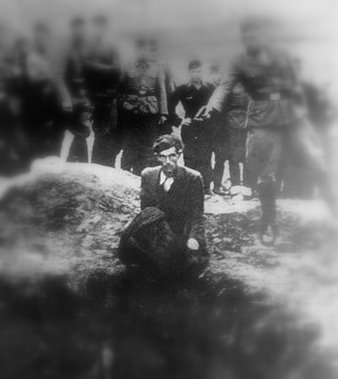
I censored this photo, keeping the historical core but avoiding the death-pornography...

I promised regular reporting on the progress of my reading of "Les Bienvéillantes". After completing the first quarter (roughly 200 pages) what were the most striking points that troubled my peacefulness as a reader?

I think - sadly - that descriptions of the cruelty and savagery of mass-killings by the SS have no longer the same potential to shock us as when we are first confronted with it. So, what shocked me as a reader is not the images per se but, if you want, the philosophical implications of these literature-generated images.

That the narrator finds himself in the middle of a landscape alien to humanity as a consequence of his thirst for radicalism and absolute - that's what is really problematic for my reading self. Besides, I had never realized before (it didn't occur to me as personal assimilation of the fact) that places like Kiev or Crimea, where I was happy, where I was in love and made love like a chinchila, were also places of SD butchery and Conradian horror.

The discussions on Hitler's orders to include women and children in the until then adult males-only mass executions are an incredible feat of literary brilliance.


After the first 200 pages I can only say that I'm going to beg my children to read this book as soon as they attain a reasonable age. This is not the universe of Hollywood vulgata, however well-intentioned some Holocaust-related films and TV series might be; this is not "Sophie's Choice" league either; but an altogether different path to understand a crucial moral and historical turning point.

Monday, November 20, 2006

Boy George


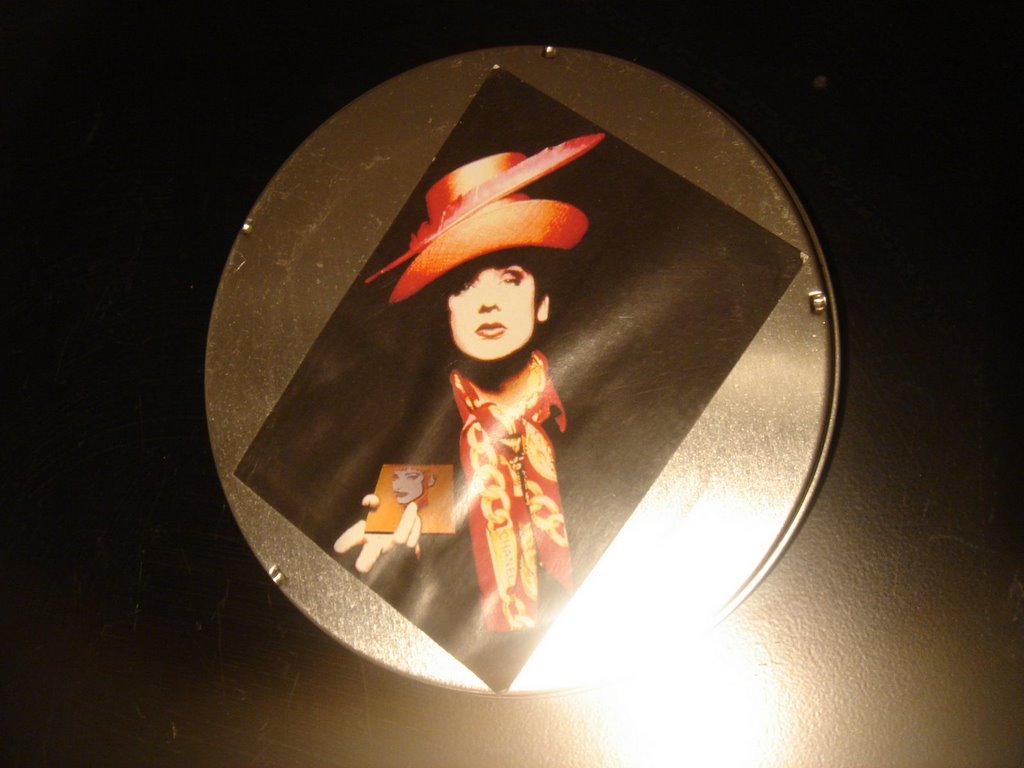
The invitation for the night Boy George was a DJ at Club Shamballa, Moscow...

Monday, November 13, 2006

Olga Chekhova


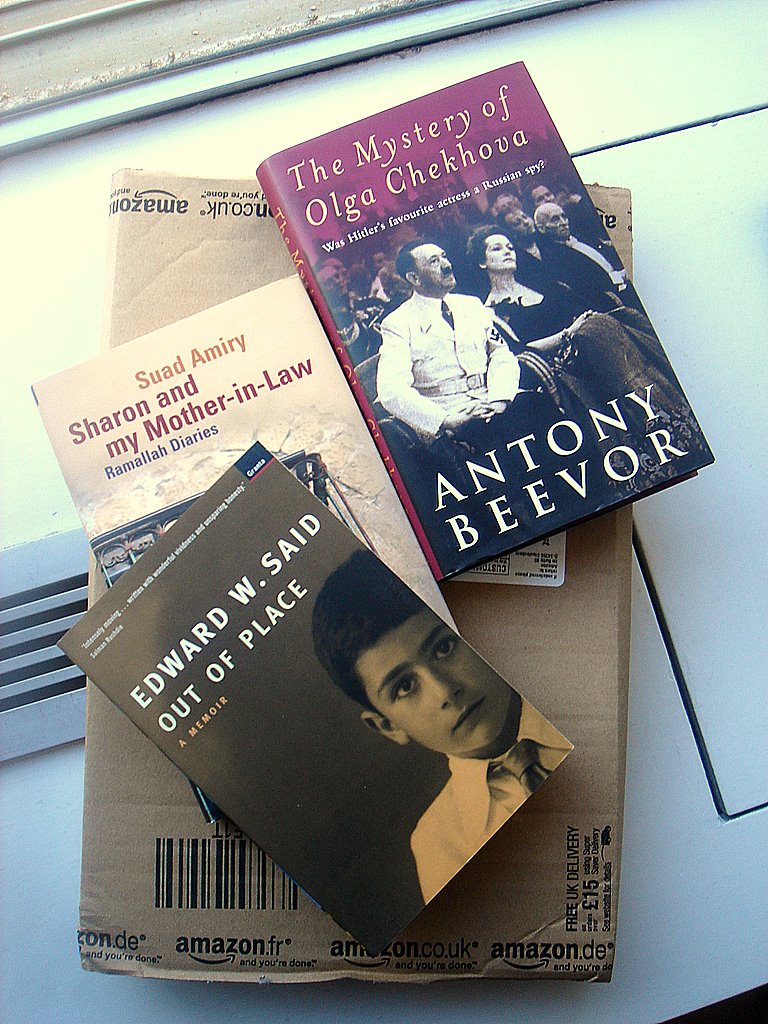
With amazon.co.uk everyday can be Xmas...


Delivered this morning, fresh from the on-line bookshop...

Posted by Picasa

Friday, November 10, 2006

Richard Steele


Frivolous cultural pursuits at home on the day of Nª Srª de la Almudena...
( Richard Steele was the founder, in late XVIII Century, of both "Tatler" and "The Spectator")

Monday, November 06, 2006

Piotr Fomenko


To see these "Three" and die...

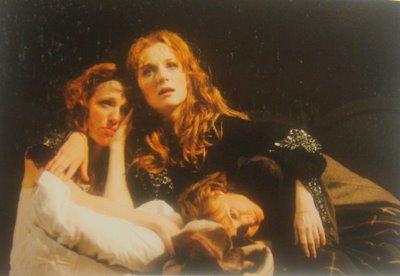
The Kutepova twins (Ksenia-"Irina" and Polina-"Masha") and Galina Tunina (as "Olga")


Sometimes a play is like a short-story on the stage. Can be excellent as short-stories can but it's not in the same league, really Darling, as grand novels. Chekhov's "Three Sisters" directed by Piotr Fomenko and performed by his "Fomenki" is like a theatrical "War and Peace" ... You enter that world, you enjoy, you laugh, you are touched, you have to think, you argue, you (almost) cry.. It's light and frivolous here and there but the mute deep wave of really heavy stuff going on ends up swallowing you.. It is always emotionally tiring to experience a truly relevant work of art (say "Las Meninas" or "Guernica" or "Sacre du Printemps" or "Gottardamerung" or "The Magic Mountain" or "Uncle Vanya" or "Arcadia" or " La Dolce Vita") ... If you dont't feel that "heaviness" something must be missing...


Twins alright but here's a tip: Irina always wear white while Masha goes for black dresses...


Last week in Madrid I went one step further in my love affair with Russian theatre and Chekhov in particular. I've seen his plays in French ("Platonov"), in English ("Seagull", "Vanya") and in Portuguese ("Seagull", "Cherry Orchard"), enjoying every word but feeling the absence of the musicality of the Russian language. I saw, in moving musical Russian, "The Lady And The Lapdog" in Moscow, a couple of years ago, not understanding one word . This time I felt I got it all, thanks to prior hard study of the (translated) text, some progress in my own knowledge of russki izik and to the miraculous aid of subtitles (in Castellano) .

At this masterly level of directing and acting the 3 hours 50 minutes experience of "Tri Siestri" is not an evening out any longer. It's an anchor point of one's inner life. Like the first time you've read "War and Peace" or that full "Ring" you finally manage to complete.

Paparazzing in a theatre is forbiden and not very efficient...


The three dolls have the hair-colour of the actresses: spot the twins...

Posted by Picasa

Tuesday, October 10, 2006

Anna Politkovskaya

The Price of Life is Cheap in Some Places...


I cannot ignore in this blog the tragic death of a Russian journalist who kept trying to tell her countrymen about what has been (really) going on in Chechnya...

Friday, September 29, 2006

Maria Fiodorovna

Tsarskoe Selo Revisited ...


Yesterday took place the re-burial of Maria Fiodorovna in St.Petersburg, next to the tombs of the Romanovs as was her dying wish. The Tsarina Maria Fyodorovna, wife of Alexander III (immortalized more than anything else by a bridge between the Paris' Rive Droite and Rive Gauche) and mother of Nicholas II was a donor of Danish blood to the Imperial DNA. History tended to treat her better than her unfortunate daughter-in-law. In a liberal democratic monarchical system the consorts of the Sovereigns are politically irrelevant. In Autocracy things were slightly different..


I happened to be re-reading some material on the Russian Revolution for purposes I will explain to the Right Honourable Reader in due time. In a kind of “ all men being equal although some might be more equal than others” analogy, all great books on the Russian Revolution are equally enlightening but Orlando Figes ’s “A People’s Tragedy – The Russian Revolution 1891-1924” sheds more light than most. There one can find small precious vignettes on secondary actors of the Tragedy.

Maria Fiodorovna is remembered on two highly dramatic political events. The opening ceremony of the first embryonic Parliament in Russian history, the (First) State Duma in 27 April 1906; and the peculiar mix of land-reform and Russian Nationalism that was beyond the famous western zemstvo crisis of 1911.

On the first occasion, held in the Winter Palace, the two worlds were set in different halves of the Throne Room. The Court was on one side, the representatives of the liberal landowning classes and the peasantry on the other. A total flop, as we would say now. And now back to Figes: “As the royal procession filed out of the hall, tears could be seen on the face of the Tsar’s mother, the Dowager Empress (Maria Feodorovna). It had been a ‘terrible ceremony’, she later confided to the Minister of Finance. For several days she had been unable to clam herself from the shock of seeing so many commoners inside the palace.’ They look at us as upon their enemies and I could not stop myself from looking at certain faces, so much did they seem to reflect a strange hatred for us all’.

On the second occasion, she showed better political skills than his son’s entourage. Stolypin, the lost last-hope of Russian statesmanship, threatened to resign if his Western Zemstvo Bill was not approved, using, by the way, the stratagem of a direct promulgation by the Tsar when both chambers were closed. Says Figes: “ It had taken several hours of persuasion by his mother, the eminently sensible Dowager Empress, to get the Tsar to go against the advice of his wife (who was at centre of the plot against Stolypin). When he received Stolypin at the Gatchina Palace his face was ‘red from weeping’.

Should we care in any way for this "ancient history"? Well, yes, very much so. The centenary of "1917" is just round the corner. Is this blogger's deepest conviction that by that time, on the eve of the expected commemorations, our "final" impressions about the Russian Revolution will be set in stone. What future generations will think of what really happened then will no longer be modifiable. A bit, if you want, when a given event gets the movie industry treatment.( Will anyone have a alternative view to the Irish Question after seeing Ken Loach's films? ).

It's a sort of race against time. The temptation to see, for instance, Lenin with pink coloured glasses will be enormous. The fight for a revisionist's view of the role of White leaders in the Civil War, like Kolchak, Denikin or Wrangel, is very much on, but there is not too much time left. Between the canonization of Nicholas II by the nostalgics of Imperial Russia and the canonization of Vladimir Ulianov by the nostalgics of Soviet Russia there must be another way. The Russian Revolution still is the single most important event to explain modern politics and to fail to understand it is to fail to understand how our political forces have evolved.

Thursday, September 28, 2006

Wednesday, September 20, 2006

Yuri Dolgoruki

The Red Square. A Militia car, the Cathedral of The Protection of The Mother of God (St Basil's) and one of the fortified towers of the Kremlin Walls.


An image is worth one gigabyte of words: the Police is guarding, the Church is awe-inspiring and the State presides over .

Tuesday, September 19, 2006

Grand Prince Vassili III

œcumenism..


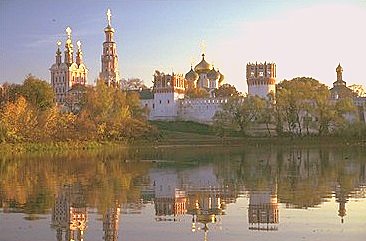
UNESCO's world heritage site Novodevichy Monastery, Moscow


The gloriously beautiful Novodevichy Monastery, built to commemorate the conquest of Smolensk by Vassili III in 1514, was where Sebastian joined last week the ranks of Roman Orthodoxy. Under the patronage of Mstr.Freddy, of shared DNA, a near free-thinking Roman Catholic. Where does this blogger of yours stand in all this religious œcumenism, the Right Honourable Reader might ask Himself? I will keep the answer to that legitimate curiosity outside the frivolous borders of this blog, if the Right Honourable Reader will allow me.