Showing posts with label Politics. Show all posts

Wednesday, January 24, 2007

Arnaldo Otegi

The bomb rather than the ballot box...


Went to Barajas Terminal 4 to fetch a daughterly visitor. I saw these Beirut or Belgrade-like images. As if an heavy precision bomb has been dropped by a F-111 from 10 000 feet. ETA people still have not made up their minds in the bombs versus the ballot box dilemma. You can't have both, as the Provisionals will tell you. Grown-up politics are tough but there's only one decision to make. Terrorism might be an over-used concept but Democracy, no matter how many times you try to bend its meaning, is still the one and only safeguard that ensures that a political struggle is conducted in a fair and clean manner.

Friday, November 17, 2006

Anthony Wedgwood-Benn

The Queen in pre-Revolutionary times...


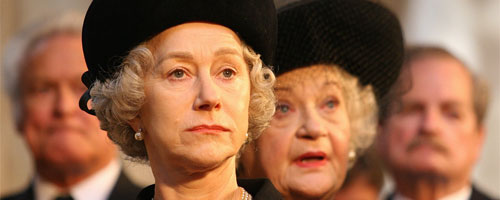
Helen Mirren's acting talents are mind-boggling...


One of this blogger of yours more striking memories of his half-decade spent in London was, beyond reasonable doubt, a lecture by a lionized Tony Benn. A Labour Party conference fringe meeting or a Quakers-organized lunch, can’t remember. But I do remember the title: “A Case for a British Republic”. Anthony Wedgwood-Benn was the Prince Kropotkin of the British ruling class. Very much a member of the higher echelons of the gentry by birth and schooling, he went on to consistently attack the Crown as an un-democratic stain at the heart of the British political system. On that lecture he warned that the British masses in a revolutionary moment - when the deference wall would have collapsed - would act as sans-culottes, metaphorically parading the heads of the Lords in their spikes.
It didn't turn out that way in the end. The escalating and retaliatory violence of class-war has been kept at bay (and does not infect the British political arrangement) by the tremendous brilliance of a few politicians who understood the risks.. Mrs Thatcher with her “popular capitalism” agenda delayed the Jacobin irruption and Mr Blair, with “New Labour” reforms in fox-hunting and the House of Lords, completed the job.

Why boring the Right Honourable Reader with all this stuff? Well. Let’s call it background reading for an entertaining masterpiece in the political film category. Go and see Stephen Frear's “The Queen” with a Ms. Helen Mirren more real as Lillybeth than that, you die. The “Courtiers” (from Buckingham, St. James’s L.C.O. or Balmoral) and the Sovereign Herself had to be rescued from pre-Bastille troubles by a political leader who showed a remarkable sang-froid. Blair was for a few days the successful Lafayette that Marie Antoinette, helas, never got.

Okay, the Monarchy was never at risk of sudden overthrow but one still has the words of Tony Benn echoing in one’s ears...

Monday, October 30, 2006

Gamal Abdel Nasser

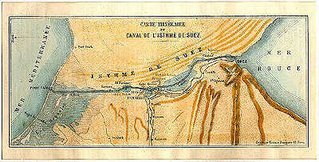
Happy 50th Anniversary Suez Crisis !


1956 is a date this blogger of yours most cherishes for obvious reasons. There were plenty of very eventful developments on that year, although I allways felt a bit let down because not one single Port wine House declared a Vintage in 56. The two obvious political iconic dates are Budapest and Suez. History will confirm their particular relevance .

The Suez Crisis has been a favorite of the British media for ages. The masochistic trait in Britishness is evident in all that salt being rubbed in the wound of the vanishing Empire. A détour here, please.. During my London times I witnessed Black Wednesday when the Pound was flushed out of the Exchange Rate Mechanism by the tsunami of the currency markets (only Soros could surf those waves...). Why am I telling this? Well, at the time of the débacle of the Pound a precedent was invoked for this drama of seeing Her Majesty's Government surrendering to the Markets. Suez, you guessed right. It was the catastrophic fall of the British Pound that ultimately convinced Anthony Eden that the game was over.. One should return to Suez from time to time...

Of all that I've read about Suez at 50 I particularly like what Samia Serageldin ("The Cairo House") wrote the other day in her blog http://www.thecairohouse.com/blog/ : "The fiftieth anniversary of the Suez crisis was marked by the media worldwide, with some essays more thoughtful than others. My father had just turned thirty years old in October 1956, when Egypt was attacked by Israeli, French and British forces. Nasser's 1952 coup d'etat had stripped him and his class of landowners of their property, and his oldest brother, a politician and party leader, had been tried and condemned to death (later freed) as ancien regime enemy of the people. It might have been reasonable to assume that a man in my father's position would have welcomed, or at least stayed neutral about, the foreign invasion that promised to topple Nasser's regime and return the status quo ante. He did nothing of the sort: he took his family to the safety of the countryside, and returned to Cairo to volunteer for the civil defense. That's human nature: when your country is invaded, you close ranks. That is one of the lessons of Suez, perhaps, that it would have been well to remember three years ago. Along with this: Suez made Nasser a hero, not to my father, but to the vast majority of Arabs."

Philip Morris

Separatist humour...


Seen in an article published in Barcelona this week...

Friday, October 20, 2006

Peter Brook


Excellent theatre can be so simple...


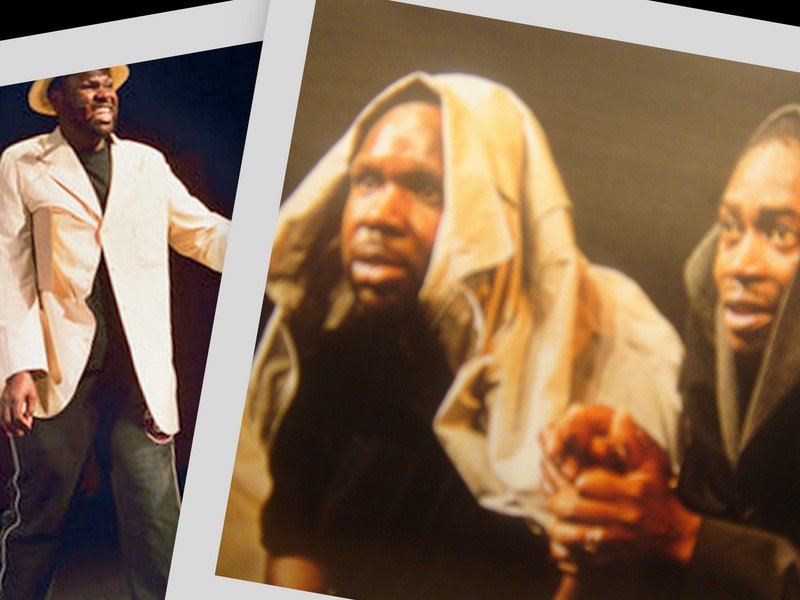
The first installment of my fruition of this year's "Festival de Otoño" couldn't have been better. The French version of Athol Fugard's "Sizwe Banzi is Dead", directed by 81-years old Peter Brook is 70 minutes of pure theatre. The actors, Habib Dembélé (lead role) and Pitcho Womba Konga, have all that's needed to engage the audience and sustain the magical theatrical vibe throughout. With a range of voice-impersonation and the richness of body-language a stand-up comedian would kill for, they make it all credible with the most austere scenic means one can imagine.. Very few props and a staging which might have not cost more than five entry tickets (5 x 20 = 100 €).. Powerful and simple text, first-class acting, and well-chosen bits of soundtrack - and the trick is done.

When I googled about this play I found an interesting article in the Economist which you might care to read. http://www.economist.com/books/displaystory.cfm?story_id=7033636


The troubles with obtaining ID cards with the right stamps on it, which is the subject-matter of the play, are not just a feature of Apartheid's South Africa... How many of us applauding enthusiastically at the end, feeling our white liberal good conscience for not having taken any part on that shameful regime, have made the association with the "sin papeles" of this day and age?...

A good play is worth ten thousand words...

Tuesday, October 10, 2006

Anna Politkovskaya

The Price of Life is Cheap in Some Places...


I cannot ignore in this blog the tragic death of a Russian journalist who kept trying to tell her countrymen about what has been (really) going on in Chechnya...

Thursday, September 28, 2006

Antonio Tejero Molina

An Afternoon at the Parliament...


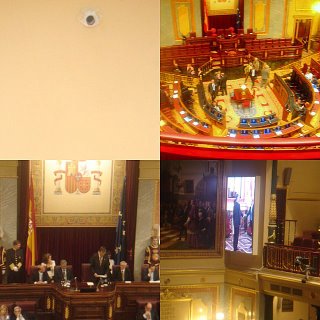
This week we witnessed one of the very rare occasions when a visiting Head of State is invited to speak to the Deputados from the tribune of the amphytheatre itself. This blogger of yours could not resist to take some (forbiden) photos for the benefit and enjoyment of the Right Honourable Reader.

Quite impressive the evidence of the presence of Col. Tejero Molina in a certain 23rd of February, many years ago:


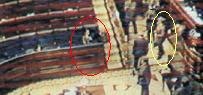
The shots are deliberately still visible on the walls of the amphytheatre of the Congreso de Los Diputados... That day some deputies had more physical courage than others.. When the warning shots were heard, most ducked and awaited squatting for the what's next while a very few, namely Adolfo Suarez, kept standing with utmost cojones and dignity...

Friday, September 22, 2006

Napoléon Buonaparte

(Heels-) Size Matters?...


Two politicians, cabinet colleagues, and rivals for High Tenure, walk together. On Election Day, would the Right Honourable Friend rather vote for A or for B?

Thursday, September 21, 2006

Jose Manuel Primo de Rivera

Atonement..


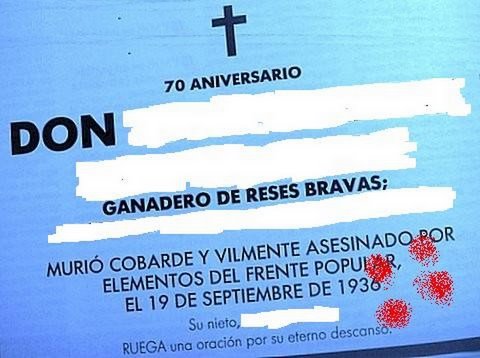
From one of the many ads published in local newspapers

What is better for the health of a democratic society? Self-induced amnesia or catharsis? The argument will run on and on...

Monday, September 18, 2006

Santiago Carrillo


Madrid, 17 September 2006,
The "Fiesta" of the PCE (Partido Comunista de España) -
courtesy EFE
 Posted by Picasa

Tuesday, May 30, 2006

Chris Patten / Paul Bowles

To understand the Islamic "Other"...


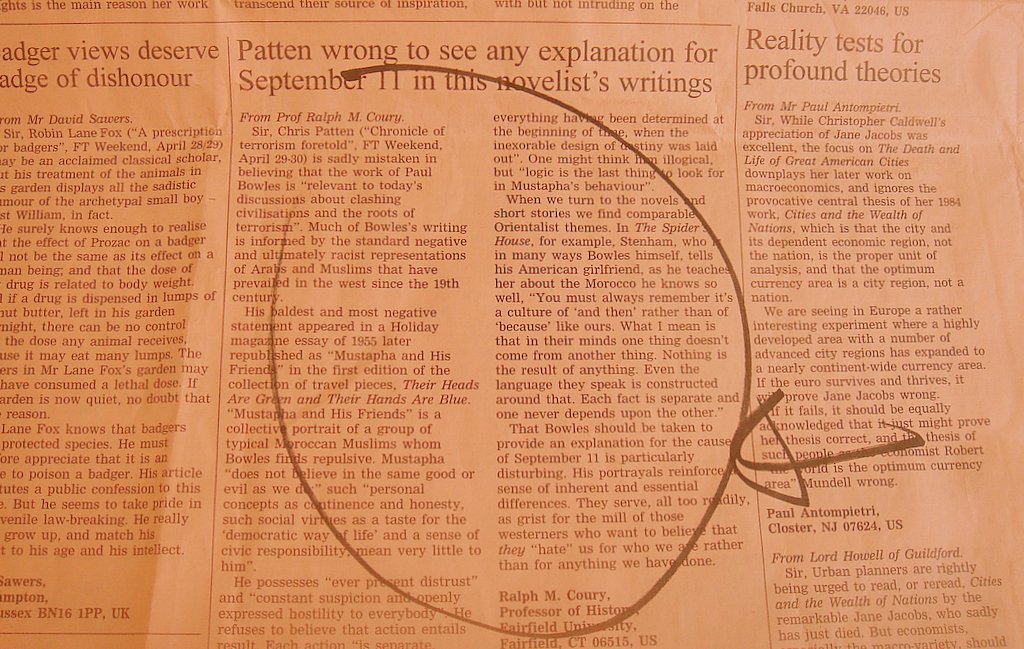
This is how it all begun, during the ritual reading of "Weekend FT" ... A scholar protests, attacking a point made previously by Chris Patten, also in the Financial Times, after a visit to Fez, that reading Paul Bowles is relevant for understanding contemporary terrorism..

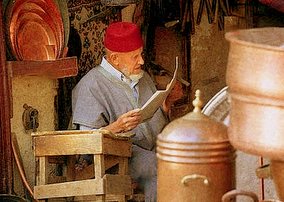
The "Orientalist"-like exotic otherness of the souk in Fez..

That took me to re-reading Bowles's "The Spider's House"...

... and from there to re-visit Edward Said's texts on Orientalism and on the evident flaw of speaking about "West" and "Islam" as almost absolute categories.

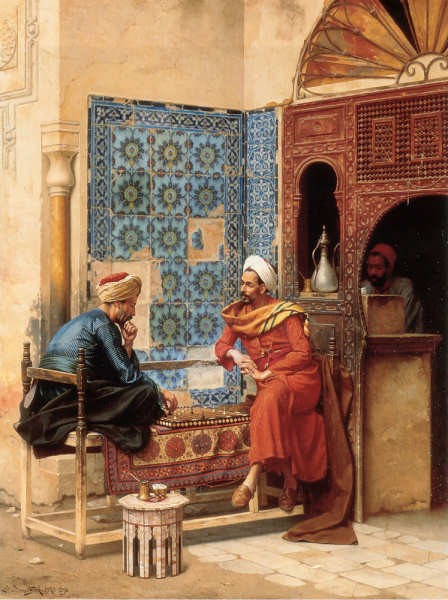
Ludwig Deutsch's masterpiece of Orientalist painting...

... and I went back to Said's critics too and to some historical background research on the Independence struggle days against French colonial rule, in Algeria and Morocco ..


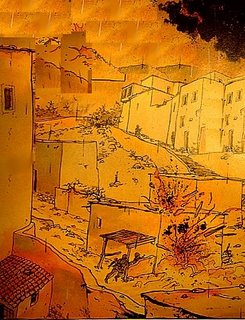
French Army against FNLA in the peculiar esthetics of comics books...

... besides, I wanted also to confirm from where Bowles was getting his insights for the Arab character in his novel (and that took me again to the Tangier chronicles).

Literary Renegades? They're mainstream now...

I took some notes and I got some photos about the books I handled during this particular quest. Everything is now ready for a blogtext. But the more I think about it, what each one of us has to say about "Islam" and the "West" is perhaps the most crucial statement of principles one is asked to do in this day and age. I lived near two active "fronts" of the confrontation, the Russian /Chechen and the Israel/Palestine ones. After what I witnessed, what I discussed and what I read, I do have a point of view. But a near-frivolous blogtext won't do. More time is needed. I suspect this post will remain a work in progress..

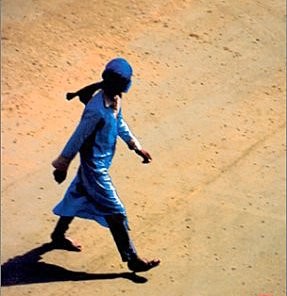
Will the Fez boy of Bowles's novel become a terrorist?


Wednesday, May 10, 2006

David Fromkin

"1922" was a crucial historical "nodule" ...


There’s too much information out there. Better to stick to a few areas, and among them to a few themes, and then, alright, be thorough, be deep.

Malinka liked my “nodules” concept for a crash course on world history and wants me to elaborate on that. I longed for a similar request from the Right Honourable Reader but to no avail.

To acquire historical knowledge from A to Z is rather tiresome if not physically impossible (considering the average life expectancy of the Homo sapiens). Instead of starting with the Neanderthal, progressing to Oriental and Classical Antiquity, and from there to the European heirs of Rome until this day and age of evil-axis metaphors and near-non-Nonproliferators an alternative methodology might be on order. Less time-consuming and, intellectually-speaking, much more rewarding.

All bores quote themselves and I will have to conform with norm: “I believe in a kind of 'quanta' or Darwinian evolutionary History. More important than a slow chronological flux are some crucial "nodules". I mean by that historical short periods which have critical mass of data, revolutionary energy and political "pathos" (either drama or tragic-comedy) enough to carry us - in a quantum-like leap - into new times.”


I have also bored stiff the Right Honourable Reader enough times already with some of my favourite A-list “nodules”. A good example is the Russian Revolution one, which I could label, to simplify, “1917”. If one tries hard to understand “1917” almost every single political development in XX Century, from Marx to Fukuyama, becomes intelligible. Worth some studying then.


What other “nodules” in the Rosary of History are worth a particular investment, bearing in mind one’s scarce resources of Time, Intelligence and energy? As it is impossible to achieve wisdom on every significant crossroad of the History of men, each one of us chooses personally a couple of “nodules” to occupy his free moments of an otherwise full-agenda hyper-busy day-to-day life.

Those choices are sometimes dictated by professional interest. When I was trying to figure out, while watching successive sunsets in Jaffa, what was the Israeli-Arab conflict all about, I had to concentrate in “1922” (the Versailles arrangement for a semi post-colonial Middle East). For that Professor Fromkin's book (depicted above) was outstanding. I obviously had also to dive into “1948-69-73" and in “1956” too (yes, the demise of British Imperial Power in Suez is a nodule worth studying.. ).

Some times our choices are just guided by our patriotic personal inclinations. A Christian, in a way, is always returning to the nodule “1 to 33 A.D.”.. A French nostalgic of Napoleonic Imperial Grandeur to “1812” – and to achieve full understanding of Waterloo he will have to end up, as all Frenchmen do, in “1789”.. In the westernmost Peninsula of Europe where I was born, “1492” and “1500, plus or minus a couple of decades” are still obsessively revisited.

Some choices for “nodular” historical research are biography-led, though. As I blogged about recently (boring self-quoting activity again): “In each “nodule” there are illuminating biographical case-studies. Among these particular revealing biographies, as code-breakers to certain periods of history, I’ve always had a fascination for gentlemen who incurred in many risks to protect their individual freedoms and beliefs (…) “ . What produces a Free Spirit? What is so precious about Individual Freedom that turns the rise of Freedom in Society into an almost secondary phenomenon? What makes one admire an atheist among a bigot religious society, or a believer in an atheistic regime, more than the glorious struggle of the Masses? Why would one rather fall for Casanova than for Marx? Why will one always tend to prefer Pasternak to Gorky? And what contributes more to the loosen up of strict hypocritical sexual morals, a rebellious serial seducer like Lord Rochester or the Kinsley Report?

- Will this do, Madam?

Monday, April 17, 2006

Guy Fawkes

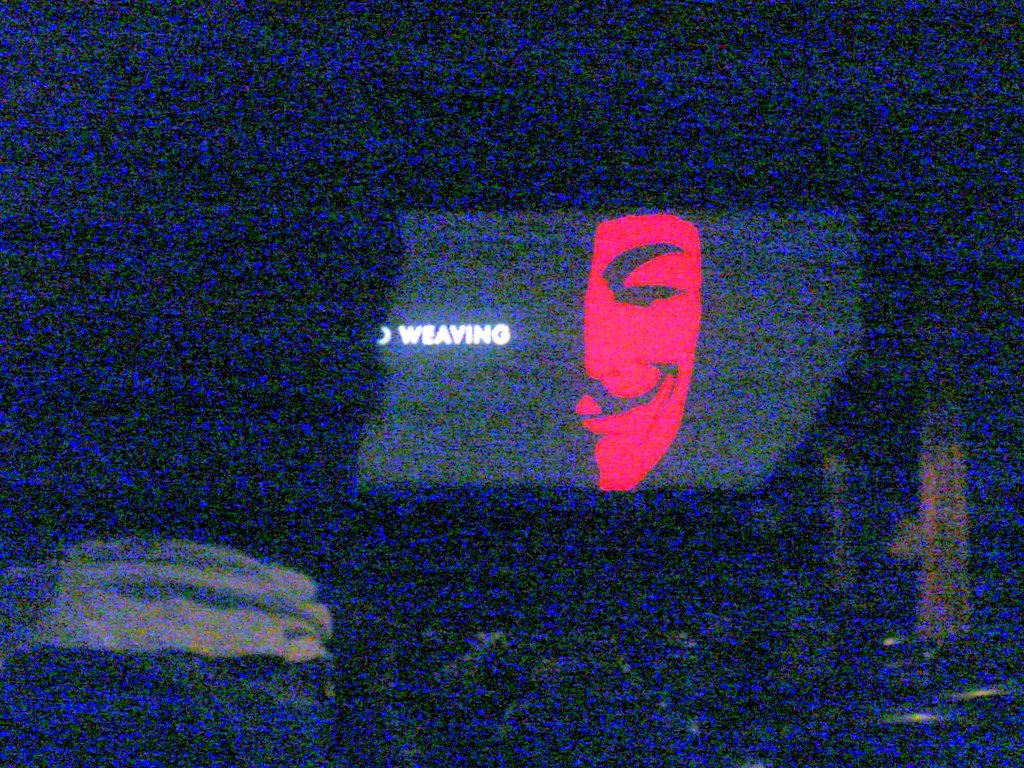
A Neo-Machiavelian Neo-Leninist with a fancy mask..


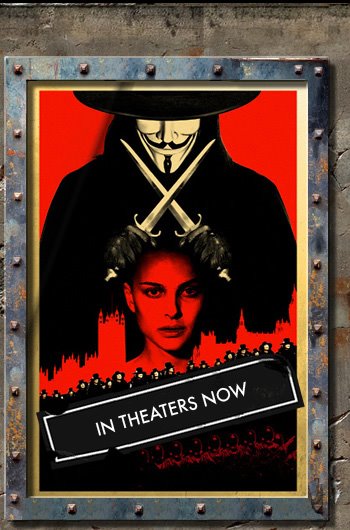
"V for Vendetta", a movie which is trash with a twist...
The Right Honourable Reader will have to excuse this blogger of yours who has been a bit lazy lately. Instead of a full text about "V for Vendetta" I'd rather settle for a quick list of points for further speculation:
- Demonizing Guy Fawkes is part of the anti-Catholic ideological foundation of the modern (post-Henri VIII) English/British State. In constitutional terms the King of the United Kingdom of Great Britain and Northern Ireland cannot be a Roman Catholic. What are the religious views of our political leaders is, in most of our countries, politically irrelevant, but in Britain whenever a public figure is suspected of converting to the RC Church there's a kind of juicy voyeurism attached. ( Most recent examples: was Diana, the Princess of Wales, about to convert? Is Tony Blair attending Catholic Mass?). Ironic then that the hero of the political liberation of Britain from dictatorship - in the film and in the graphic novel it's based upon - is none other than a Guy Fawkes figure.
- Ironic too that one has to blow the Houses of Parliament, the symbol of the sovereignty of the People, in order to regain that same sovereignty. (Fantastic special effects' scene and almost worth the trip to the local cinema) . The original "Papist" plot was to kill the political targets expected to be in the Parliament building while here we have it as a kind of fun fair pyrotechnics to thank the masses for attending the meeting (like in the closing events of marketing-saturated electoral campaigns). Does not make sense.

Tuesday, April 11, 2006

Silvio Prodi

Gambling Rules of Democracy...


Toss it: Heads or Tails?


The result of the Italian elections seem to confirm a theory I have been trying to sell for many years: that voting is an aleatory event. I'll explain briefly. When you are thaught statistics or probabilistic calculus the very first lesson is about what happen when you toss a coin. If you do it 10 times you might have 8 "heads" and 2 "tails", if you toss it 100 times you might end up with, say, 45 "tails" and 65 "heads" but if you repeat it 1 million times you are going to have 500 000 "heads" and 500 000 "tails". What is the probability of getting "heads" when you throw a coin? One in two. 50%. And likewise the probability of getting "tails" is the same. 50% is the magical number that keeps coming whenever there are two choices and there is no exogenous bias. Just let "chance" play without constrains and in the end you have that magical number.

Every time you have a big election (say above 10 million votes) and you have only two choices (Silvio B., or George B., Romano P. or Al. G) what do you get in the end? 49.82 versus 49.73? Right, it's the dear old 50% figure lurking again!

Bottom line is: if you want the numerical legitimacy conferred upon a democratic choice you should have at least three voting options ( and that includes avoiding second round of elections with just two candidates left). Otherwise is just a matter of chance that decides who's going to be your political leader for the next couple of years.

Monday, April 10, 2006

Lucifer


Revisiting an old demon...


"At Home" ...
Can a blogger who has indulged in reporting about evening events and a party or two cross the red line of writing about his own “at homes”? For just the pure writing pleasure of reviving a three-dimensional play the prohibition stands.. But what if there was a serious point raised in between the pilau rice Uzbek-manner (“plof” as they say in Russia) and the pears cooked in Porto with vanilla ice-cream? Wouldn’t a serious blogger be too strict on himself if he would refrain from reporting to the wide right honourable reading world about it?

A bit of context first, then. The large dinner table is a perfect circle, conducive, as the host hopes (sometimes in vain), to widespread debate, thus avoiding the pitfalls of multiple simultaneous small one-to-one or one-to-two private conversations. Herr Ingenier was there, with his gentle manners and his gentle Garbo, carrying with utmost eccentric elegance the lights of Old German-ness. The HassebladPortraitist, who had spent part of her schooling youth in Barcelona, speaking therefore both Castilian and Catalan, was in belligerent political spirits. The Honourable Caliph of Moraleja, always ready for a fight, jumped on the occasion, despite the warning glances from his peace-keeping charming wife, the Gajhar Princess. The Transalpine Homologue somewhat subdued in the beginning of the discussion managed to score some points further on. Malinkarusskaya was naturally keeping an eye on the progress at table of plof consumption (of her cooking authorship) but she lend her acquiescence to her husband’s forays into recent Russian history.

What was the point of contention? - the Right Honourable Reader is entirely reasonable upon insisting on being answered. In Political Therapeutics should one wake up sleeping demons in order to conjure the past? Or should political corpses better be left untouched in societies’ cupboards?

Is the Transición in Spain, after the death of Franco, a necessary exercise of mass amnesia, for the better welfare and prospects of the democratic Spaniards, or has the Civil War still to be revisited at some point to better address grievances that long for their respective catharsis?

Herr Ingenier reminded the presents, including the bellicose defender of the amnesiac status quo that without contemplating the tragic and distasteful content of their historical cupboard the German post-war generations would not have been able to build an healthy democracy .

The Honorabile said much the same. This blogger of yours couldn’t resist his usual tirade about how the therapeutic grief-work of the Revolution remains to be made in Russia, with evident consequences for the solidity of the foundations of the democratic building in that country (for so long prone to bouts of enforced amnesia).

She would have none of it. The “deal” in the Transition period, leading to the Constitution, was that both Rojos and Nationalists would bury their accusations, their witnesses, their corpses and would not bring them to the light of political day again. And what some of the new big players of the power game were trying to do was tantamount to breaking that “deal”. All a bunch of tragic PandoraBox-openers, magic tricks apprentices of politics, salt-rubbers on Civil War wounds who might stir again hates and brother-against-brother fights.

What the Truth Commission did in South Africa cannot be valid for other political azimuths, one wonders? The HasselbladPortraitist might have a point in the "let’s forget it all and start a new" attitude when the economy is flourishing and the people never had it so good. But what if some particular constituency feels its idiosyncrasies were not properly addressed (specially since various “Nations”, “ Nationalities” and “Autonomies” have managed in the mean time to claim the right to indent the constitutional status quo of 1978). Would it not be better to speak out freely about the last years of the Republic and about some alternative non-Euclidian non-transitional-orthodox views of recent past?

Can one advocate active loudly revisionism of the post-Revolution times in Russia (for the sake of enlightening the crucial young generations who will decide what to do about the relationship between Russia and Europe) while prescribing a silent follow up of the gentlemen’s agreement of the post-Franquismo?

The need to bury one’s cupboard corpses properly was near consensual by the time the last laps of Chekhovian vodka and Malt-derived spirits had arrived.

With so much worrying about enlightening the youth, the masses and the politicians, the Honorabile Homologue recalled, with his customary elegant eloquence the etymology of the word “Lucifer”. The One that bears Light. Weak souls should abstain from dinning out...

Wednesday, March 22, 2006

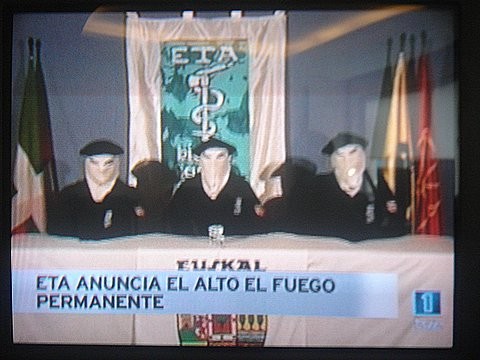
Gerry Adams


"Euskal Herrian, 2006ko martxoam"


Reminds one of the whole IRA cease-fire stuff...
Light at the end of the tunnel?..
Good luck to all the negotiators...
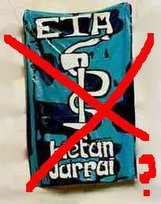
I might add a little story or two to my parsimonious legend to the digitally manipulated ETA's logo. I'll dive again into my diplomemories, if the Right Honourable Reader has nothing against it.
Two decades ago, in the capital of the Kingdom of Great Britain, I was given the brief to follow and report from time to time about "Northern Ireland" (as was customary at the time to keyword it for our readers' attention. Neither "IRA", nor "terrorism in Northern Ireland", nor (God forbid!) "Irish Question"...). I was quite young then but sufficiently wise to keep my mouth shut and my thoughts for myself for more than a year about that issue. In the meantime I read a lot (history and left-wing revolutionary politics are always the keys to understand modern self-determination struggles in Europe), I listened a lot (including the overtly pro-United Ireland "Fringe Meetings" at Party Conferences of Neil Kinnock's Labour ) and I started to probe a willing expert or two. Time had perhaps come to make up my own mind about what could be done, in my humble views at least.
And that takes me to my little story, short and with a puzzling morale. The scene takes place at another Party Conference, this time the Tories (which were in power at the time), in one of those after-Plenary drinks-parties which were held in large rooms of the seaside hotel which doubled as HQ to the meeting. Someone introduce me to a quite charming and well-rated Member of Parliament. We exchanged cards after a while, when empathy had become obvious. After answering his question about what dossiers was I following at the Embassy, the good-mannered MP, who had been involved in "Irish" issues for quite a long time, asked me what in my view could be done to get the IRA black-cloud out of British political skies. With all my youthful naivete, believing in my right to state the obvious, I said: "I guess.. you'll have to discuss with Sean Feinn". The MP's reaction was for me quite a shock ( I still remember it, as in slow-motion film). He just turned his back on me and went away.
And the point is? - the Right Honourable Reader might ask. Well, it was obvious for a third party observer that the British government would have at some point to consider the unsavoury move of dialoguing with the political wing of an armed/paramilitary/terrorist group if it wanted to make some real progress. But inside the political decision-making machine that move was still a tabu. (Years later, mostly with Blair but also with Major before him, that was of course the path to follow).
Am I saying that talking with Batasuna or the coming to power (in Madrid) of a young socialist PM has analogies with what happened in the British Isles? I'm sorry but I have to decline to comment on that. I know nothing about ETA or the Basques, and I will go on keeping my mouth shut.
Just one final little story, heard from the mouth of the nowadays most influentiall compatriot of mine in Brussels. That gentleman, with whom I have spent years in the same classroom of an old-fashioned Liceu, was very busy at some point of his foreign affairs-related career trying to bring close together the political stands of the two Angolan warring factions. He told me at the time something I keep remembering: "The fact that the International Community has a pretty good idea of what needs to be done is not enough. Even if the IC has a number of coercive means up its sleeves the crucial thing remains to be obtained: that the parties of the conflict themselves believe that the time for serious dialogue has come. We cannot impose peace if they're not ready in themselves for it."
My argument therefore is something like this: the path to overcome a conflict might be obvious for some time to the outside world but unless it becomes obvious too for the belligerent parties at a deeper interiorized level that "solution" is perhaps better kept silent. Besides, no one likes when someone turns his back on you...

Thursday, March 16, 2006

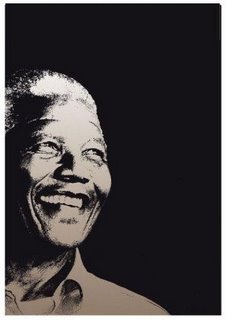
Nelson Mandela

Recycled farewell speeches...
The allCiudad diplocommunity has been busying itself with successive farewell parties to honour JazzCool, the departing Ambassador from the huge southernmost chunk of Africa. This blogger of yours went to two of them, an honest performance-as-blogger statistic.
The first one was at the Puerta de Hierro imposing mansion of DerIngenier, that old Madrid acquaintance of this blogger of yours and therefore also of the Right Honourable Reader. The speech from the exiting HoM (Head of Mission) or CMD (Chef de Mission Diplomatique) was the traditional blend of debating accuracy, serious soundbites, sentimentality and near-veaudevillesque histrionics. The whole routine of a pro! Quite effective, one might add, while taking mental notes for future personal farewell toasts.
An enormous selling point for a diplomat from that country, or for any national from it for that matter, is the iconic status of President Nelson Mandela. The SouthAfrican Statesman's charisma is a kind of stardust that confers upon those who get close-by a kind of glow that shows...
At the second party, in downtown Calle Serrano, hosted by the Bielayaprinceza, this blogger of yours arrived awfully late, even by Spaniard standards, and missed the speech. But Ambassador JazzCool tranquilized me by saying I hadn't loose that much since it was recycled from the previous one I had witnessed.
With the smoked salmon someone commented that Mandela was a Royal figure pretty much like H.M. King Juan Carlos in these shores. All around this blogger of yours there was endorsing bodylanguage, which was ironical given the amount of more traditional monarchists present. I intervened to recall the very last "European Tour" of President Mandela, and his stop in Cardiff, where a meeting of EU leaders was taking place. People on the streets were ecstatic and gathered in almost anti-Irak War numbers to salute the hero of the Down With Apartheid movement. With a hint of moralist nostalgia I confessed it was pleasant to see the masses demonstrating for a Statesman like Mandela rather than for a Bono or another Rock or Movie Star (an awful wordplay just came to my mind "rather William Pitt than Brad Pitt"). Guests recalled then their own meetings with the President, at one time with Reverend Tutu present.
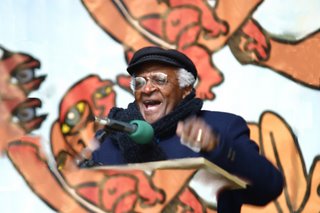
That's when the chat spotlight in the dinner-party turned to Desmond Tutu and we were told by Herhelenichighness a most delicious soundbite with which this blogger of yours will avail himself to punch-line this post. Very recently, in Seville, for a ceremony related to the Andalusian Junta-sponsored contribution to an hospital in South Africa, Reverend Tutu enchanted his audience. With his inimitable smile he thanked their charitable gesture saying: "I came to you to bring you tickets, for each and one of you, to Heaven. Just, please, wait a bit and refrain from using the tickets right away."

Thursday, March 09, 2006

Felipe Gonzalez

Old Rock 'n' Rollers Never Die...


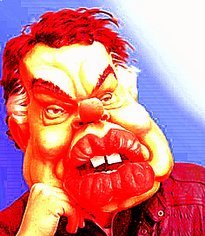
The local latex doppellganger of President Gonzalez..


This blogger of yours had a split second serious dilemma when he got an invitation for a dinner cum lecture on 8 March 9 pm, featuring Don Felipe Gonzalez, former PM. Should one accept it, doing the "noblesse oblige" thing, both in professional and political terms, or should one indulge in a diplomatic excuse to be able to see one's team in its match against Liverpool F.C.? Well, I did the right thing. Happily so, I may add. The ex-Presidiente del Govierno is in excellent form, regarding both stamina and eloquence. One can see he has not "aged badly" as so many members of that distinguished club of ex-powerful political leaders.

As with an actor, the appeal of applause and of 'oh! just one more curtain call' can lure a heavyweight has-been into staging a comeback. Bad move! The rejected by the ballot box should make themselves scarce and concentrate on acquiring a serious hobby or perfecting an already existing one. Don Felipe went for bonsai trees as Sir Edward Heath went for yachting. Much better than hoping from foundation to institute and from strategic center to think-tank in the quest for the elusive newsworthy broadcastable soundbite.

Political lecturing vs football suffering, I've won yesterday on both pitches. Gonzalez gave us a remarkable "unplugged" version of what should be our current anti-terrorisms efforts. And Benfica marches on on the way to Paris..

Just one last remark: former successful politicians who have kept their part of the deal (by not showing off and by keeping a low profile ) should be treated with utmost sympathy, even tenderness. They know they could still make a meaningful contribution if only they were not kept carefully in the dark by the inner circle of the current leader and that makes them as touchy as scorned former girlfriends. Only the warmness of a live audience can restore their former glorious self-esteem. And I want to assure the Right Honourable Reader that such resurrection is a pleasant thing to witness..


Monday, February 20, 2006

Feodor Dostoevsky

The ex-Yugoslavia implosion through Karamazov Bros ' eyes...


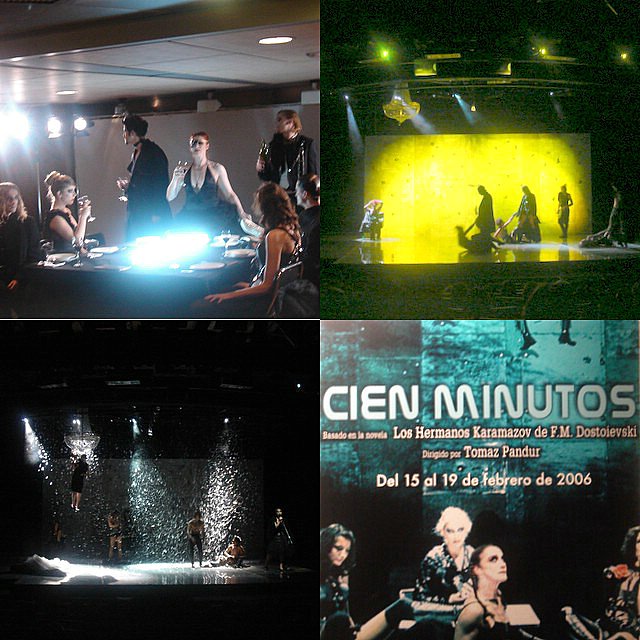
Tomaz Pandur's "100 Minutes"
A production from the Ljubljana Festival by the Slovenian Theatre Director Tomaz Pandur came to town. Called "100 Minutes" (the duration of the play) it tries to exorcise the experience of war in the former Yugoslavia through the vehicle of Dostoevsky's "The Brothers Karamazov".
As the production notes tell us:
" 'The Brothers Karamazov" is one of the more savages works by Dostoevsky: corruption, vice, perversion, violent sex, murders, evilness, parricide, rapes, abuses, infamy: Sodoma". The Director selected that work to establish a resemblance with the bloodl-lustful war in former Yugoslavia: the four brothers Karamazov (if one adds Smerdiakov, the bastard half-brother and manservant of the household) and their father are the four or five (sic) Nations that were dilacerated apart after the death of Tito, who kept them together despite their many differences: Bosnia-Herzegovina, Croatia, Slovenia, Macedonia and Montenegro". The notes add: " It is as a reproduction in a very onirical tone and erotic reaching madness, of that terrible war. The only good thing Tito had left for their mutual understanding is a common language: Servo-croat".
The show is in fact quite effective indeed in portraying the "feel-awful factor" of a war . Violence was masterly conveyed. Helped by the carefully selected very loud, very "metallic" weird music (including from the orgy scene of Kubrik's "Eyes Wide Shut") and the superb work of the actors who have the menacing body language and the bodies to match. Corruption, vice, perversion.. etc, etc (see above) are all there. (The epileptic seizures of Smerdiakov were particularly uncomfortable to watch, a sure proof of its scenic efficiency). As to the erotical content and the efficacy of the (violent/perverted) sex-scenes I'm not so sure. Faked violence can be in itself violent but can faked intercourse convey more than plastic, faked sex?It's like violence work better in a live play than in movies but regarding sex it's the other way around.
One needed a minimal knowlegde of Dostoevsky's Brothers K. not to loose what Pandur was trying to underline ( and I'm proud to say that I re-read the metaphysical adventures of Ivan, Dmitri, Alioscha and Co. last Summer). In particular, the diabolical lines from Ivan about the immediate corollary of the inexistence of God ("If He does not exist everything is allowed then") . War as the supreme example of where our journey is aimed at when we all let ourselves go.
A tremendous loophole in the otherwise exemplary structure has to be pointed out though. In a play where all the religious imagery was Orthodox Christian and all the Nations/Brothers roles were assigned, where was the Kosovar/Albanian dimension? Where were the Muslim Albanians of Kosovo and FYROM? Where was the non-SerboCroat linguistic world?
No one ever learns anything? Reading the "Brothers Karamazov" and carrying on is not enough.

Wednesday, February 15, 2006

Cavanna

Freedom to enjoy cartoons...


satirical verses..


How come this blogger of yours who never fails to come up with a blogtext whenever any Arabia-related piece of news arises from the horizon is keeping his cards so scandalously close to his chest in this whole affair of the cartoons? That is a legitimate concern the Honourable Reader will not have failed to feel.
"Spin fatigue" might be the obvious answer. The patterns of reactions are so cosily arranged by now. The heavy artillery ( deep Huntington-related stuff) has been used. The media virgins defending freedom of expression at the top of their wailing voices have tear down their clothes. The rent-a-mob manipulators got their forty seconds of CNN prime time. (Even, Goodness Me!, the well intentioned Norwegian-dominated International Presence in Hebron - dear old TIPH with their ice-cream vendors' white overalls.. - had to resettle somewhere away from Al~Khalil !).
My Correspondent from Ramallah adopts a stoically note in her e-mails, no matter the closeness of live ammunition shots - and still I fail to decide myself to write about it.
And then "Charlie-Hebdo" gets itself involved and .. There!.. The urge to blog about a more than thirty two years-old story changes it all..
Has the Hounorable Reader any idea how was it possible for an engaged adolescent to read in Lisbon the forbidden "Charlie-Hebdo" before 25/4? "Charlie-Hebdo" could not be sold in Portugal before 1974 period. But there were ways to circumvent the authorities (which only proves the point that we were far away from a fascistic country, not withstanding the Leftist propaganda). A bookshop belonging to a enlightened bourgeois family, with democratic gentle-Left opposition credentials, did accept to forward subscriptions of forbidden publications. Acting like a mail box in a way. I was very proud, being 17 , of this semi-clandestine stuff. I was a subscriber of Charlie-Hebdo and felt that I too was making my small contribution to erode the berlinwall of Portugal's absence of freedom and democracy. Some of that satirical stuff was precisely what was needed to shake the un-cool grey world of these Woodstock-denial political authorities.
I had just recently fall for a new girl-friend, smart and posh, lovely eyes and almost Trotskyite. She lived not far way from the bookshop and was quite in awe with my underworld life of forbidden magazines. One day she offered to collect for me the latest copy. We met the following day, the lady-like smartly-dressed Plekhanov student carrying with her the folded magazine. She had used a silkish pink ribbon to give it an almost Valentine Day's note. (But there was no St Valentine in those times, not then). She was disguising a slightly embarrassed awkward feeling when she handed me over the folded "Charlie-Hebdo". I went through the pink ribbon and the folding stuff to have a look at the front page: a cartoon by Reiser with very obvious and vulgar hairy genitalia. So sweet of her, to overcome her upperclass gut disgust, and ideologically hardened with Rosa Luxembourg writings, proceed to wrap in girlish pink tones the magazine for her excitingly non-conforming boyfriend..
Would it not be great if, as we speak, a near adolescent couple of lovers, in Teheran or Amman, in Cairo or Gaza, were experiencing some similar story around a forbidden satirical magazine? Just a couple of years away from the advent of Freedom?