Thursday, May 05, 2005

D. Gaspar de Guzman y Pimentel, Ribera, Velasco y Tovar

A Capital for an Iberian Empire? ...

Agent Provocateur
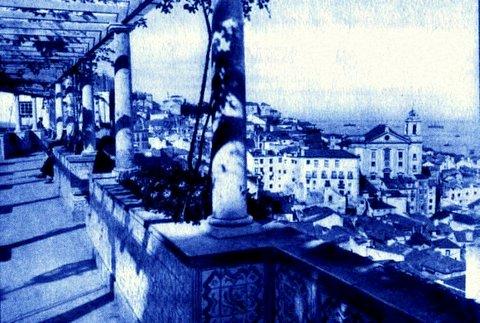
Can't find the bibliography now, neither googling helped me, but I remember one of my former His Excellencies telling me that the Conde-Duque de Olivares, first minister to Filipe IV, was convinced that the price for keeping the unity of Iberian Spain was the designation of Lisbon as its new Capital..

Today, I read in "El Mundo" a column by Raul Del Pozo, titled "Agujero negro" about all the centrifugal critiques harassing Madrid and the Madrileños. ("Black-hole", because Catalans have supposedly described Madrid "as a Black-hole and the siege of the mediatic Right"). There's a paragraph I feel like sharing with readers, but I don't dare a translation. So, non-Castellano-speakers abstain, please.

"(...) Si hay que adelgazar el Estado, ya anoréxico, quitemos la capitalidad y que se vayan con la sardana a otra parte. Madrid fue declarada capital del imperio por una decisión caprichosa y arbitraria de Felipe II. Su padre el emperador le aconsejó que se fuera de Toledo para huir de los canónigos; la corte debió estar en el Guadalquivir donde las gentes se agolpaban en las orillas esperando el oro, o en Barcelona, archivo de la cortesía o en Lisboa, fundada por Ulises, pero no fue así y los nacionalistas piensan que la Puerta del Sol es el centro geográfico de una España inexistente, cerca de un río sin carnes, un esqueleto de cristal. Si Madrid mata, si Madrid es un lugar de pocas palmeras, donde una vez vinieron los franceses pero se olvidaron de traer la guillotina, mejor que nos dejen en paz. (...) "

Eduardo Laborde

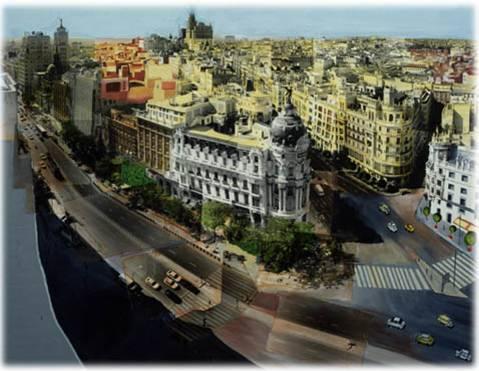
Madrid at his New-Yorkish best...

Eduardo Laborde's "Vista desde el Circulo de Bellas Artes, Madrid.2003". Mixed media: photography and oil.

One doesn't know what Uncle Friedrich would make of it but "Nietzsche - Art& Drinks" looks like a winner in the arty-drinking scene of the Ciudad. A masterful concept in the progressive intertwining of the two most fashionable activities in self-conscious European trend-setter Capitals, attending an Art Gallery's vernissage, that is, and enjoying a stand-up drink. As the locals put it: "combinar uma galeria de arte con bar de copas". This time works by Lalo were on show (http://www.eduardolaborde.com/ )

The Garden Biker kept introducing me to new faces and one's near-Alzheymer shortcomings with name recalling got very acute in the end. Names like Emma and Hortensia, I do remember though, so deliciously non-Nitzschean...

At some point, a young Consultant (name neither saved, nor backed-up, sorry) engaged one with the concept of "organic job". Like a broccoli or a raspberry well worth deserving a certificate and special fiscal protection by the State. What could be taken as a ecologically-correct, certifiable, "organic job"? A job where the proximity of a tender sea breeze would replace air-conditioning; a job where working hours would feel like organized idleness; a job where every bureaucratic scribbling would be done in recycled paper; where the right to siesta would be added to the European Constitution; where the coffee & sandwiches tray at mid-morning pauses would be replaced by guahavaca and passion fruit juices; where all work stations would have magnificent views... "Organic Job" quickly turned into a new Utopia ...

Mercedes Casa Ocampo II

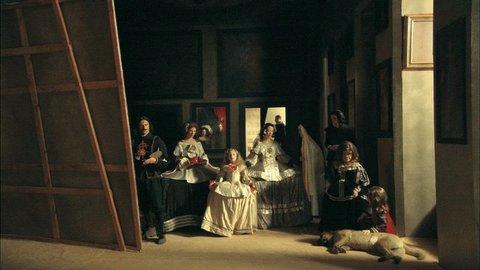
The mastiff gets the spot light...

Ms. Casas Ocampo, my newly discovered member of the 'Post-Las Meninas Painters Society' is exhibiting her latest paintings in Galeria Paz Feliz, just two blocks away from the door of the building where I live.

Mercedes Casas Ocampo

Even with faceless characters ...

An Argentinean painter ( http://www.casasocampo.com) also under the spell of the "little ladies"..

Wednesday, May 04, 2005

Jane Suzman

Everybody is looking at the sleepy mastiff...

(Just improving my skills to display a photo on this blog)

Tuesday, May 03, 2005

Manuel del Palacio

Satirical orgies...

In the morning newspaper a journalist, rather a columnist, makes a reference to how the satirical XIX century writer Manuel del Palacio described an orgy. Can't help to share it with you:


" Tanto les deleitó la putería /

que pasaban jodiendo todo el día."


PPC

Diplomatic farewells or "Pour Prendre Congé"...

Last Friday was a bitter-sweet occasion. A farewell dinner-party for a colleague who is leaving. The awareness of the quick turnover of the personal landscape that surrounds you when you're an expat is always a bit sad. But we are glad and joyful for our departing friend who is always in tremendous spirits, awaiting the new sceneries an challenges.
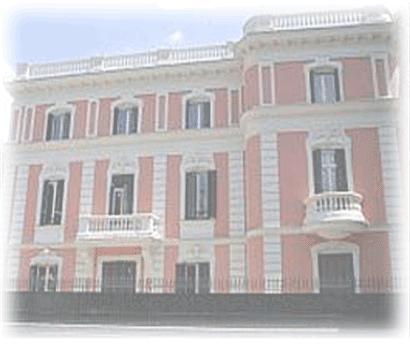
Anyway, one cannot be blue or moody for a long time when a superb patriotic stew with real gourmet flair was on offer. A "court-bouillon" ( http://www.recettes-et-terroirs.com/recette_detail-22-2066.html ) was introduced in the recipe with obvious merits. The toasts were up to the expectations. Everybody left the imposing building (portrayed above) in good spirits.
( I remember with some nostalgia those parties that were organized by Their Excellencies for my own departures. The first in imposing Belgravia, black-tie stuff and short speech, as demanded by local tradition. The second in a warm Holy Land night, wearing a linen suit in a wonderful outdoors dinner-party with an exchange of really warm friendly toasts. The third, a rather more discrete, blazer-using, supper with glasses raised for mutual health.
If that progression continues I'll have to dinner alone next time, with an open shirt, keeping silent... :) )

Andrei Platonovitch Platonov

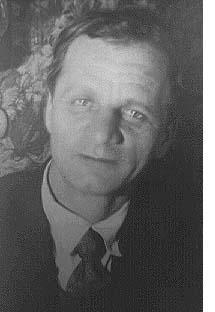
Haven’t read him but it seems he was the New Great Russian Writer

Andreï Platonov


When dinner engagements half-slice a long-weekend what should you do? Risk anyway the engorged autopistas? Or, rather more sensibly, dive into the backlog of books to read? I choose the latter. Quite productive long weekend on that sense, I must say. A fully russky interlude. Nina Berberova’s “Alexandre Blok Et Son Temps” (it looks he never did it to his love-object of eight hundred (!) poems eight hundred, even though he married the Muse of his “To a Beatiful Lady”…); Andreï Makine’s “La Femme Qui Attendait” (about the myth/gold standard of the “Absolute Faithfulness” in a woman..) and “Loin de Byzance”, collected essays by Joseph Brodsky (a must read if you like “Piter” (St. Petersbourg) and what that liquid, classical palace waterfronts have done to Russian poetry and to Ms. Akhmatova, in particular). These essays deserve a full blogtext but I’ll stick to just one point. Brodsky says that the only true successor of Doestoevsky in terms of greatness is Andreï Platonov, whom, I must confess, I’ve never read a line of.
I took the step to essemessing an acquaintance of mine, a Russian writer with whom I’ve spend some great talk-drink epiphanies in both Moscow and Paris, to ask him his opinion. He confirmed the judgement on Platonov’s greatness.

So, let’s do some amazonedotcoming, and get to Platonov. What are we waiting for?

Carl von Linné

End game of a difficult collector's deal?

Goliath, the Rastro antiquarian some of my dubitative readers might remember from a previous post ( on Albertus Seba, March the 3rd) came to my flat in the Barrio de Salamanca area for a kind of final discussion on whether the deal would go on or not.

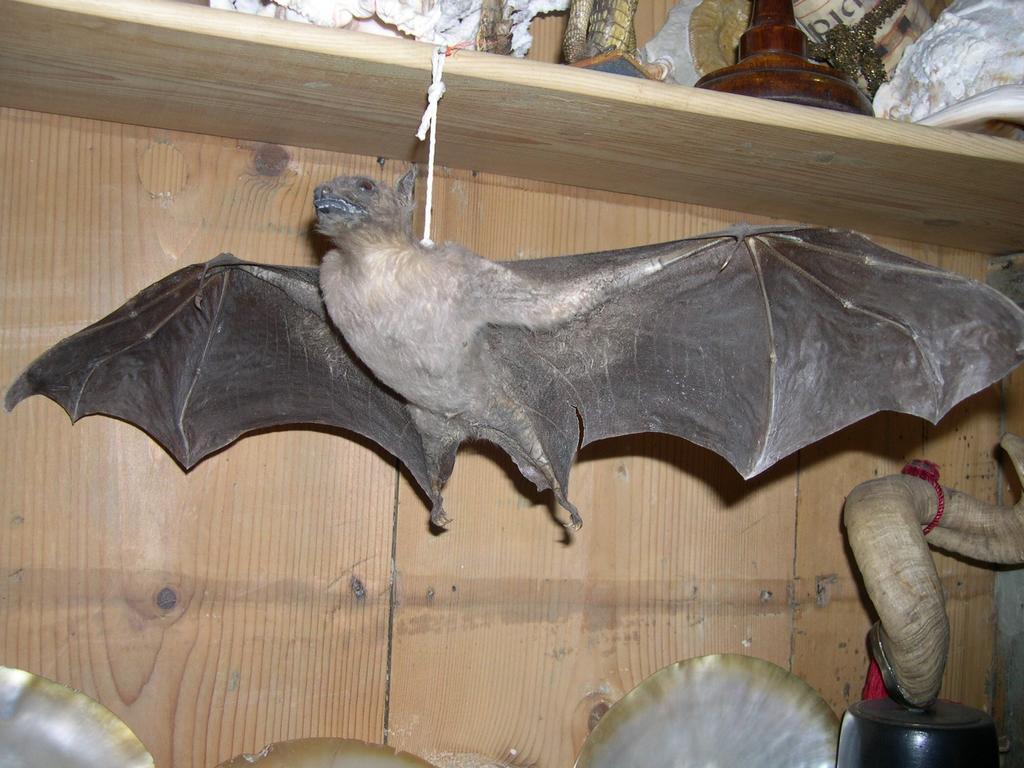
One of the points of contention, the Vampire-bat, was overcome quite easily, I rush to inform everybody out there. He looks glorious in his flying mode.

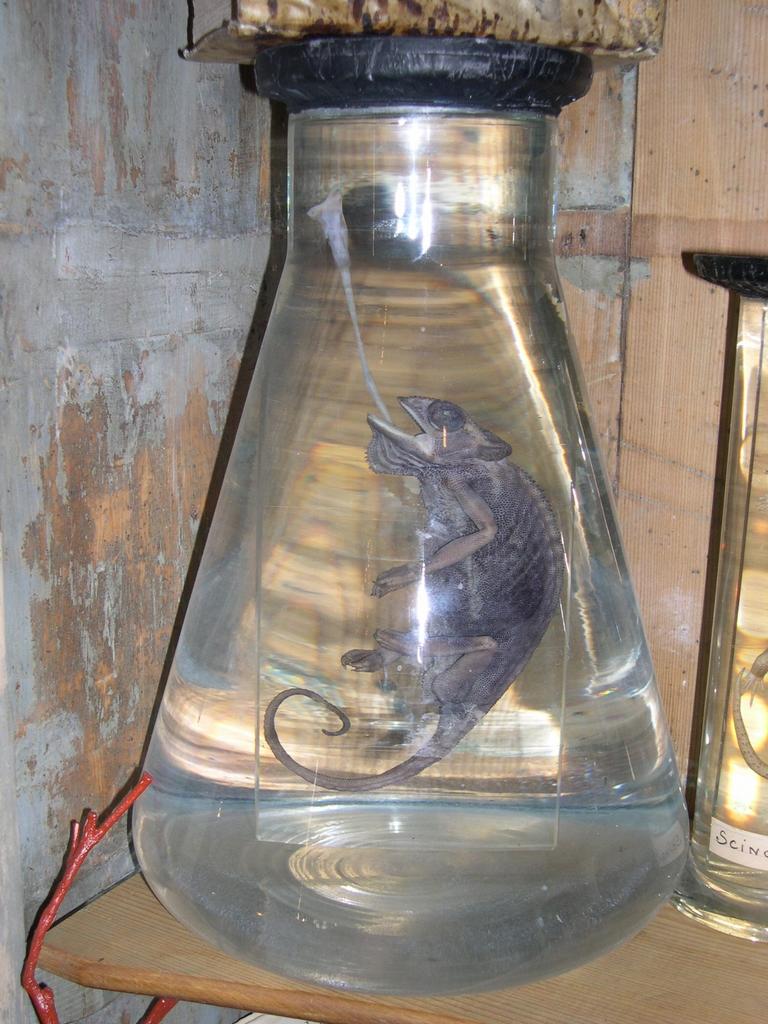
Unfortunately I cannot say the same about the Chameleon. Goliath says he has a personal interest, linked to a private detail in his life, in the colour-changing reptile (now in the un-changeable grey-bluish tone of every biological object immersed in formaldehyde for more than a century). Pity...

But there's more. The Armadillo too won't be included in the items for sale . How can I persuade this greedy collector not to keep the best stuff for himself?

There's more in life than possessing a stuffed armadillo or a formol-fixed chameleon, you say? Well, each blogger has his own idiosyncrasies. And remember, always protect diversity, even in the blogging world.


Thursday, April 28, 2005

D. Fadrique Enriquez de Ribera, Marquis of Tarifa

A Greek-Roman & Al~Andaluz cocktail. The best of both worlds ?


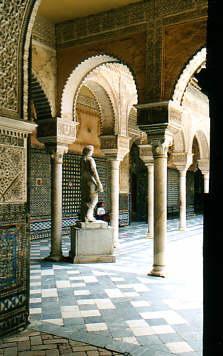
The 'Casa de Pilatos' in Seville.

( For what the Deutsches Archaelogisiches Institut is doing there please go to www.dainst.org/index.php?id=611&sessionLanguage=en&sessionCountry=DE)

You might remember that a couple of weeks ago I high-speed train-traveled to Seville for BigJo's birthday party. My eventual readers will be kindly asked to re-read what I've posted about that party in this very blog under "Pepe Luiz Vazquez", the torero.

In the few spare time before a beauty late siesta needed for a party starting at midnight I strolled in the familiar territory of the Barrio de Santa Cruz. Nothing quite compares to those narrow streets in a warm low-tide tourist season Spring afternoon when the air is saturated with orange flower fragrance and the calmness of total silence prevails. And that miraculous low decibel level was a fact, thanks to twenty two athletes from R.Madrid.C.F. and Barcelona.F.C. performing at that very same time in every possible TV screen.

If one likes garden statuary, slightly decadent museum atmospheres where Greek or Roman statues or fragments are in non-selfconscious display are much better than frenchyfancy formal gardens. The Rothschild Museum in Jerusalem or the Greek-Roman Museum in Alexandria are warmer friends than the palatial wonders of Tsarskoye Selo (Ekaterinaya's included), for instance. If one likes patios and enclosed gardens the very top, nobody will argue against it, are the Al~Andaluz related gardens. Either the real Moorish thing in the Generalife (Alhambra, Granada) or the 15 to 16th centuries "fusion" western-granadine architecture you can see in Seville and all over Andalucia.

To have Greek-Roman classical statues in an Mudejar context is slightly anachronistic and it might be look as an odd mix but, like creative contemporary cuisine, it works surprisingly well. One might even be tempted to think that the Marquis of Tarifa http://www.tarifaweb.com/cultura/aljaranda/num42/art1.htm, who brought the statues from his voyage to Jerusalem in 1519 and build the Alhambra-like palace, might have been the most civilized man ever.

( This post is dedicated to Madame de Tourvel, with whom I first shared the marvels of the "Casa de Pilatos")

A. E. Housman

Faustian joke...


Housman's dilemma. Through Stoppard, playing with Time again, the poet-professor's Old Self is having a chance to set some things straight with his Oxford University student's Young Self.

(Children , think of it! What if the one you will become in your post-adolescent future could visit you in your present times and illuminate your choices? )

Pierre Louÿs


Rouge et Noir
The best kept secret in this town is the after-office happy hour on Wednesdays at Santa Engracia 24 (in the corner with Españoleto) named after the pen-name of Monsieur Marie-Henri Beyle. Went there with the Garden Biker who's still recovering from the only truly trendy form of self-abuse (a ski accident, that is). Nice warm dwellings. Pompeii-Blood red walls, very good neo-tapas nibblings and good looking high spirits in abundance. Golden-Young clever girls, including a NewAge-ish looking intellectual, dressed in black, with stunning eyes who is studying the works of Pierre Louÿs ( http://www.proverbes-citations.com/louys.htm) at the Complutense. Louÿs wrote about the essential human experiences of both carressing and kissing. "L'Amour humain ne se distingue du rut stupide des animaux que par deux fonctions divines: la caresse et le baiser".
Can you really find yourself gin&tonicking at the heart of Imperial Spain, 28º C outside, evoking André Gide's friend? Yes, it can happen. At the "Stendhal".

Wednesday, April 27, 2005

Tom Stoppard II


I swear it's the last time I bother my audience with anything related to the best living playwriter. But It would be a pity if hypothetical readers of this blog got the impression that Stoppard is in a way reducible to Arcadia.

I have a short list of my favourite plays from Stoppard, which I utterly implore my children not to miss a chance to see it whenever the opportunity arises:


  • - "Arcadia" - classical vs. Romantic landscape, "classical" /scientific viewpoint vs. "romantic" /humanities approach. As Tom himself said: the play is about the contrast between the classical temperament ("those who have particular respect for logic, geometry and pattern") and the romantic temperament "those with a much more spontaneous, unstructured communion with nature"). Newtonian physics vs Chaos Theory framing Love, "the attraction that Newton left out".
  • - "The Invention of Love" - classical ancient poetry and "in the old days" ' repression of emotions vs. Romantic, and erotically engaged, life of a contemporary poet. Around Housman (and Wilde a bit) , Classical Scholarship and Romantic Poetry; http://www.albemarle-london.com/inventionl.html
  • - "Travesties" - starring Lenin and James Joyce. Revolutionary vs. artistic life projects. "If you can't be an artist you have to be a revolutionary. Or is it the way around?"
  • - "The Coast of Utopia" trilogy - starring Bakunin, Herzen and Turgeniev, and dealing with "classical" revolutionaries, like ordinary "Communards", with romantic-anarchist ones, like Bakunin, and with former believers in revolution but still artists, like Turgeniev.

    It’s the IQ versus Emotional Intelligence debate all over again, plus the Left/Right political shaping and the weight we are prepared to give to Art and to the pursuit of Love in our lives. In all these plays you get closer to that major seismic fault-line in our own divided Faustian-driven personalities. Are we to see to world through revolution-friendly eyes or through art-leaning eyes? Equipped with a cerebral, rational "classical" mind, potential scientists of our existential project, or rather with "romantic", emotions-driven, a-scientific ammunition?

Science/Knowledge,Art/Sensorial Experience, Love/God (Extrasensorial Experience...) and Revolution/Socio-Politics are the Four cardinal points we all have to be aware of in plotting our own stand. Those Stoppard plays are a brilliant short course on that mapping we all have to do for ourselves. (Goodness me, I end up elucubrating about the same stuff as the lectures on the model of "The Personality in Situation" by the distinguished voice-impaired Professor of Psychiatry during my own Etinrcadiaego-like University years!)