Monday, May 08, 2006

Miklos Jancso


A non-Bolshevik Eisenstein-ish look at the Russian Civil war...

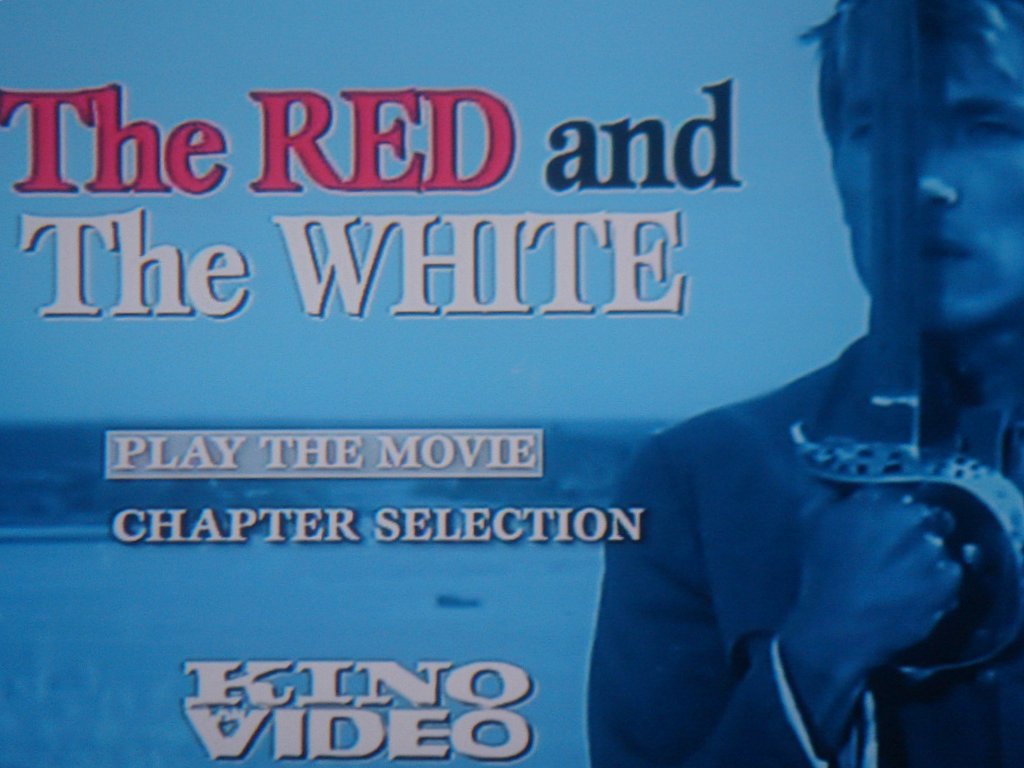
The Main Menu of the DVD edition of Miklos Jancso's master-piece...

Forget Pasternak's "Dr. Jivago", either the book itself or the film and TV adaptations (this week NTV (Moscow) is finally broadcasting a Russian version with Oleg Menshikov).. forget Bulgakov's "The White Guard" (book, play, film or TV series).. forget even "Corto Maltese en Sibérie" !(comics book or animation film).. If the Right Honourable Reader wants one forceful insight about Reds against Whites in the Civil War just after 1917 He has only to look for a copy of this unbelievably powerful fim. Miklos Jancso, an Hungarian film-maker with a classic Soviet schooling, gave us the most credible depiction of military logic and of the heroic absurdity of war this blogger of yours has ever seen .

And some of the images are just to die for:

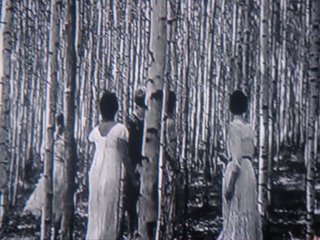
... like the ball-dressed nurses in the forest of "biriosi"..

...or the cossack uniforms in a abandoned monastery...

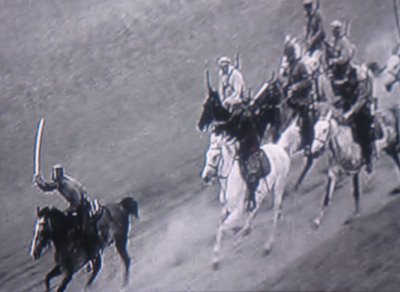
... or the Bolchevik light brigade charge ...

Maurizio Gucci


From latest ad for Gucci jewelry..
Posted by Picasa

Valentino Rossi


motosexual with an hangover?..
 Posted by Picasa

Friday, May 05, 2006

Julie Christie

"Past is a foreign country, they do things differently there" ..


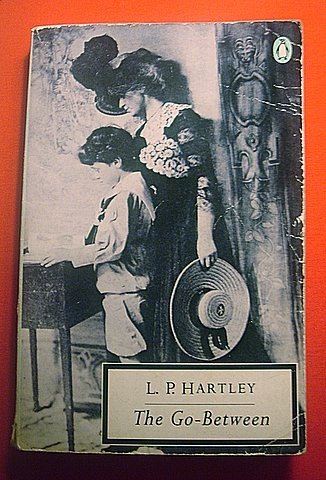
"Woman and Boy looking at a Book" by foremost American photographer Gertrude Kasebier

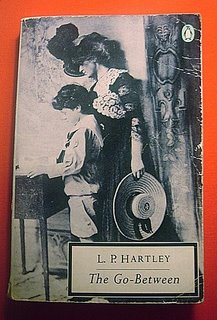
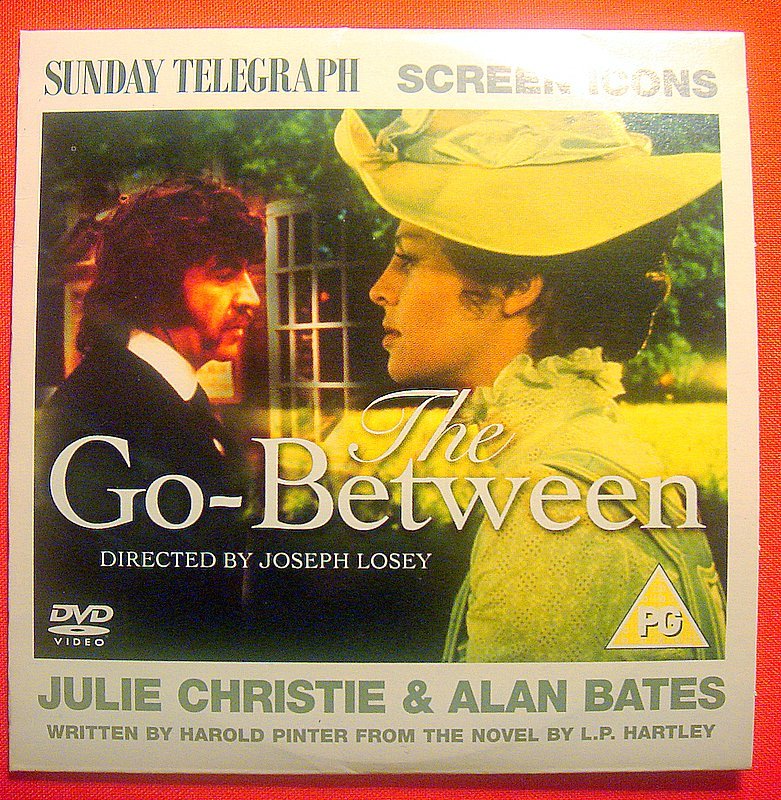
Malinka now and then confesses herself lacking in stamina to find the ideal next book to read and asks for my help. Her usual technique is to shout from the library-corridor the name of an interesting looking book. I answer back with carefully chosen two-syllables expressions like "Hmm-Noops!", "Hmmm..Good", "Forgerit", "Tooboring" and "Didnlykit". A couple of weeks ago she shouts "What about The Go Between"?. "Nothing is ever a lady's fault " - I reply. "What?" "Past is a foreign country, they do things differently there" - I insist. She emerges in my room with the paperback in her hands. "I guess it's worth reading, then..". I tell her that the book, by L.P. (Leslie Poles!) Hartley was turned into one of my all-time favourite films.. The colours of long English Summer afternoons.. A simple but unforgettable theme music one tried to play on the out-of-tune piano.. And there were big names involved too.. Joseph Losey,the Cannes-laureate Director... Harold Pinter the Nobel-laureate author of the screen-adaptation... And Julie Christie of course. Julie Christie, to die for, in the main role. "Who is Julie Christie?" - asks Malinka. Who is Julie Christie??? Who was the main votive figure of all my generation's adolescent wet-dreams?.. I try to explain that she was even better that Virginia McKenna or Michelle Pfeiffer or Jacqueline Bisset or Charlotte Rampling, although part of that category of out-of-this-world passion-inspiring beauties when in full cinematic lighting and make-up. She had never heard about her . I tell then to my too young "The Go-Between" prospective reader that I will order the film first thing in the morning, so that she can understand what my awe is all about.

Surprise! There is no DVD edition of the film! Fortunately, when I'm about to resign myself to ressuscitate my VHS video player I spot, among the amazon.co.uk order list, a reference to a second-hand DVD in a cardboard pocket. A vivid e-mail correspondence then follows with a pleasant auctioneer which has for sale a free bonus to a Daily Telegraph week-end edition many years ago . Gerald wants to make sure I understand that it's a freebie and that it's not a video, which is the only format released so far by the producers of the film. I thank him for his gallant concern but I was indeed eager to get a DVD, either bootlegged, downloaded or newspaper bonus, I didn't care.

So I waited for Malinka to finish the book and then.. zzzzwaap! Like a white columbine or a a flower bouquet in the palm of a magician, my DVD cardboard envelope appears in my hand out of nowhere. We proceed to spend a nice couple of hours around the film and our own experiences of Summer manors with posh English accented-aborigines .

Now it's maybe the right time to humbly confess that although I had acquired the book with the firm intention to read it - having loved the glorious film - I had not in fact did it so far. I am now engaged in countering that shameful hole in my reading armour. Having already almost finished that task, I'm most pleased to announce to the Right Honourable Reader that, as it happens time and time again, the novel is immensely more rich than an already enormously satisfactory screen-adaptation.

So, let me act as a Go-Between myself, carrying this time a message from the author to the Right Honourable Reader: please be curious about the most "different" and exotic of all places, the most foreign country of them all - your own Past.

Johnny Depp


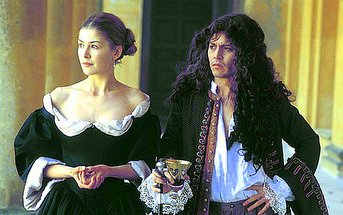
Glass in hand...


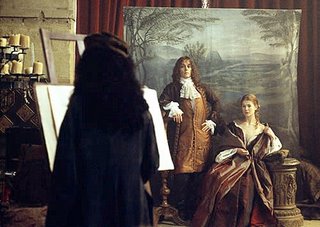
Mr Depp in the role of Lord Rochester, in "The Libertine"


Will the Righ Honourable Reader be bothered with a rhyme by Rochester that involves Catherine of Braganza, Charles II’s Queen? This blogger of yours is unreservedly grateful…

Legend has that the King and the Wits were discussing to find a word which would rhyme with Lisbon, and our Libertine hero managed, almost in one go, to include Catherine (Kate), Lisbon and his pet hate, Edward Hyde, the Earl of Clarendon (the foremost Minister in Charles’ Council) in a satirical attempt. Rochester proposed:

A health to Kate!
Our Sovereign’s mate,
Of the Royal House of Lisbon
But the devil take Hyde
And the bishop beside
Who make her bone his bone

*

Rochester was of course a drug-addict which brings us to his rock-star type behaviour of quick descent into physical dependency on ever more large doses of drug-intake. His drug was alcohol, still a quite powerful ticket to fast-forward one’s life. Jeremy Lamb’s biography of Rochester deals a lot with alcoholism, to the point of boredom. He stresses though, brilliantly in my view, that much of our Libertine’s whereabouts cannot be separated from the behavioural patterns of an alcoholic. The alternate moods between creative euphoria and self-hating depression, the bursts of violence, both the aphrodisiac and shut-off properties of ethanol, all is very much there.... The film puts it quite well: Rochester always has a glass in hand, a bit like a pro of the diplomatic cocktail circuit (the joke goes that you recognize a diplomat by his arthritis in his right hand.. from holding the ice-cool gin and tonic all his life..) . And the movie puts it quite well too the other major physical affliction of Jay Wilmot: syphilis (fantastic stuff if you want Johnny Depp to have a chance of convincing a forthcoming Oscar jury about his acting performance). http://www.hollywoodjesus.com/movie/libertine/notes.pdf

What we don’t have is a burned-out finale (like Kurt Cobain, Brian Jones or Jim Morrison). He does not OD but has, instead, a rather “silent majority” moralistic end. In his death-bed he turns from atheist into a Catholic, his wife and kids are all around him and he does repent and apologize for his sinful life.. That somewhat surprising decision rises an interesting point: if the impairment of judgement that can be ascribed to a tertiary syphilis brain coupled with all the pathological effects of chronic alcoholism is invoked to justify (that is, attempt at nullify) his bad behaviour, shouldn’t one doubt the mental sanity of his last minute conversion, too?

In any case, it might be interesting to remember that the alter ego of Rochester in Etherege’s play, I mean Dorimant, is not himself a thoroughly radical Don Juan figure. He does not have to face the Commendatore and end up in Hell ( soundtrack by Wolgan Amadeus M.) after repeatedly refusing to repent. Besides, Dorimant and Rochester proper also do not quite carry their utterly ruthless delight in controlling others to the sadistic heights of Valmont or the Marquise de Merteuil. We have here in fact a hybrid. The “rake reformed” pattern plus a “D.Juan”-like biopic. ( For Portuguese consumers only: there is an pious highly-moral equivalent to this hybrid pattern in the figure of Jose Maria Barbosa du Bocage, a XVIII century poet, who also begun as a libertine, a sceptical and a pornographer and ended up conformed and comforted with the Church’s last ointments).


What must surely be stressed in the end is the brilliant quality of Rochester’s writings and the scintillating English of the Restoration play-writers ( Etherege, Wycherley, Dryden, Thomas Otway, the Howards and a few others). Full justice to the supreme wit of their dialogue was done by Stepphen Jeffreys in his modern play (and script). His is a tour de force of bringing to our attention the exceptional life and times of John Wilmot, the 2nd Earl of Rochester.

Thursday, May 04, 2006

Antonio Lobo Antunes


António Lobo Antunes in town. He said one writes fiction better when near brain fatigue..
 Posted by Picasa

Stephen Jeffreys

The 2nd Earl of Rochester: A non-fictional "Restoration" Don Juan...
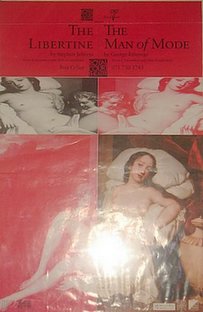


The poster of a double-bill evening at the Royal Court Theatre, circa 1995


As promised, I will try to share with the Right Honourable Reader the logbook of my recent trip into the universe of "The Libertine". What immediately came to my attention when I first got acquainted with my Lord Rochester was the fortunate conjunction of so many kudos or brownies points in my personal table board. Let's check. Relevant historical period (Restoration), importance of Theatre as the art-form of his Times and a rather first class personification of the myth of Don Juan. Bingo!

Let's take on History first. I hope I've made clear for some time now that I believe in a kind of 'quantic' or darwinian evolutionary History whereby more important than a slow chronological flux are some crucial "nodules", historical short periods who have critical mass of data, revolutionary energy and political "pathos" (either drama or tragic-comedy) enough to carry us, - in a quantum-like leap - into new times. The "nodule" Restoration is a very interesting one indeed. When the exiled son of the decapitated king returns to Britain in 1660, as Charles II, an intense and exhilarating unstable chunk of history ensues. For a brief period, not one single ideology, or political movement, or institution of statecraft, or religion apparatus was strong enough in itself to impose its viewpoint or its solutions. People were fed up with the Puritanical party-pooper's zeal of Cromwellian times and welcomed, at least in London, the soft debauche of the restaured monarchy. And the art form which provided the aptest expression of that age was Restoration drama. Theatre as the key to revisit the inner loins of that period ! (as Cinema is doing for these days and ages) To make it a little more appealing to our patriotic eyes we even have a certain Catherine, a Portuguese Queen, kind but moustachoed, sweet and accommodating but ugly as the Sin. Too crude? My apologies. Allow me to proceed.


In each "nodule" there are illuminating biographical case-studies. Among these particular revealing biographies, as code-breakers to certain periods of history, I've always had a fascination for rebellious gentlemen who incurred many risks in order to protect their individual freedoms and beliefs, and who, to top it all, have left beautifully written accounts of their individual struggle. ( Casanova name immediately comes to one's mind whereas the most evident cases in the A-league of English Literature, the only writers that had lived their art to the same degree as Rochester, are Lord Byron and Oscar Wilde)


As for libertine mores, it will not come as a surprise to the Right Honourable Reader if this blogger of yours confesses a certain obsession with the Don Juan myth. Allow me to quote here Prof John Barnard, who edited the play (Etherege's "The Man of Mode") where the main character (Dorimant) is none other but a thinly disguised Lord Rochester :

"Don Juan, the seventeenth-century creation who stands as a naturalist and rationalist antagonist to précieux idealizing of Courtley Love. (Just as Machiavelli's semi-mythic status reflects the emotional and intellectual crisis consequent upon the discovery of Realpolitik in the late sixteenth and seventeenth centuries, and Faustus testifies to the scientific assault on the boundaries of God-given knowledge, Don Juan is a response to related crisis in sexual attitudes). (...) Dorimant is allied to Don Juan and hence to the libertine and skeptical strain in seventeen-century culture, whose most obvious contemporary exemplar was Lord Rochester".

Not everybody's cup of tea? Open to easy attempts at character assassination like this one from Samuel Johnson:

"in a course of drunken gaiety and gross sensuality, with intervals of study perhaps yet more criminal, with an avowed contempt of decency and order, a total disregard to every moral, and a resolute denial of every religious observation, Lord Rochester lived worthless and useless, and blazed out his youth and health in lavish voluptuousness".
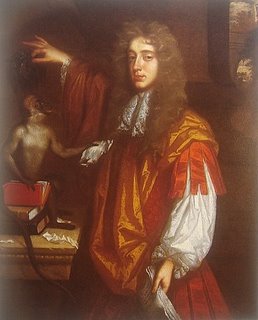
Jacob Huysmans's famous painting at National Portrait Gallery, London

depicting Rochester with a monkey


Is this then what made the figure of John Wilmot so appealing to generate one contemporary play (the already mentioned "The Man of Mode" from his good friend George Etherege, later knighted); inumerous entries in contemporary memorial efforts, including in Pepys' diaries; an extensive list of biographers (from the seventeen-century onwards with metronomical regularity, including, in 1974, from Graham Greene himself - "Lord Rochester's Monkey"; and, as the more recent pinnacle, a modern play, by Stephen Jeffreys ("The Libertine" )http://www.dramaticpublishing.com/jeffreys.html. It was that play which turned into a movie script gave us Johny Depp excelling in the powerful lines of the Prologue:

"Allow me to be frank at the commencement. You will not like me. No, I say you will not. (...) But later when you shag - and you will shag, I shall expect it of you and I will know if you have let me down . I wish you to shag with my homuncular image rattling in your gonads. Feel how it was for me, how it is for me and ponder: Was that shudder the same shudder he sensed? Did he knew something more profound? Or is there some wall of wretchedness that we alll batter with our heads at that shining livelong moment! That is it. That is my prologue, nothing in rhyme, certainly no protestations of modesty, you were not expecting that I trust. I reiterate only for those who have arrived late or were buying oranges or were simply not listening: I am John Wilmot, Second Earl of Rochester and I do not want you to like me."


But we do, my Lord, we do..


(to be continued)
D. Bonifacio de Calatrava


An honorary trip to Cáceres ...


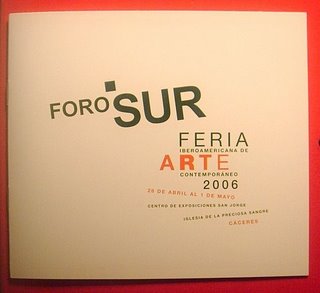
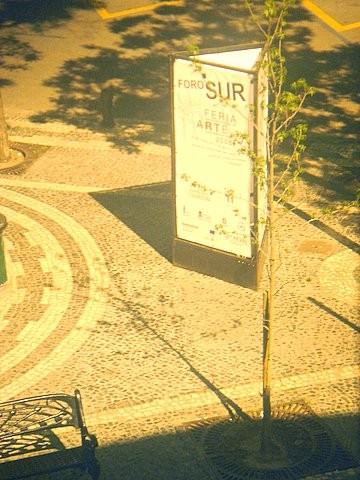
"Foro Sur", the ARCO-like art event in Cáceres, Extremadura


What took me to the uppermost beautiful casco histórico in Extremadura was a very peculiar type of protocolar ceremony. One that allows this blogger of yours the utilize the admirable and rarely-used verb to bestow. A decoration, a black and yellow ribbon and the respective cross-like medal, had been bestowed by the HoS to Our Man in Cáceres and I was there to applaud the honour confered upon him and to help in the practicalities of fixing the ribbon around his neck. A most charming and resourceful Consul, his human qualities are admired none better than by his Daschund companion, Don Bonifacio de Calatrava. Thanks to the professional activity of the son of Bonifacio's master, who happens to have ajob at Louis Vitton in Paris, the happy dog has a LV collar, that, for once, is not a made-in-Patpao counterfeit. In his acceptance speech The AbetardaCollector recalled to us, officials and friends, how his father, now deceased, had worked for the good neighbourliness in that Estremadura-Extremadura border. He claimed that his father was much more deserving of a decoration than himself, which made him ask from the Ambassador to allow him to accept the decoration on behalf of his Father too. A touching touch in a wonderful outdoors afternoon at an imposing Parador.


Staying in Cáceres overnight we had a chance to stroll in the ancient church turned into a modern art gallery for the Foro Sur ( Quite amazing stuff. Medieval stone floor and hyper-abstract large canvases really do go well together) . And later on to be initiated into the gourmet features of local-made repápalos, thanks to a generous HoM.

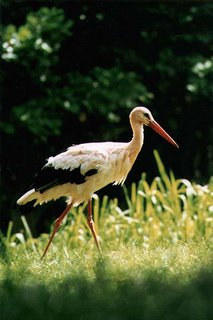
I returned to Madrid with an addition to my collection of stuffed animals, courtesy of the brand new Comendator. A male red-legged partridge, of imposing allure. I consider it though as a kind of appetizer for the serious business we have been discussing. A stork, no more no less, is what I've been aiming at. Totally legal and with the exequatur of the environmental local authorities..and hopefully H5N1- free... :)


Wednesday, May 03, 2006

Matte Gonzalez

Is there a Female Art World?


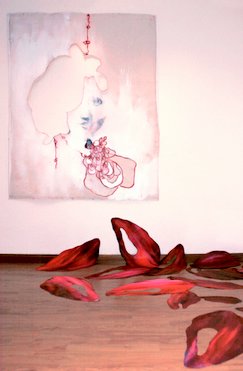
Could this be the artistic end-result of a male painter?


The opening of the Exhibition of this blogger of yours' friend Ms Matte Gonzalez was attended by a disproportionate number of female Art-lovers.. That prompted a self-indulgent exchange of soundbites while sipping outdoors, in the calle, the red Rioja in the sadly obligatory plastic cups. Is the late afternoon vernissage circuit a thing for women, to add to the ladies-who-lunch concept? Is this the female equivalent of the happy hour in the local Financial District wine-bar?

Will painters adapt to market research results showing (like it did happen with car-makers) that in a couple the woman will be more and more the initiator of the buying process? What if there will be a special catering for "feminine" tastes in Art (whatever it might be?). After the third green olive and half a dozen cubes of tasty hard cheese someone asks if one can really talk about Feminine Art? (A bit like feminine erotic "good-taste" fiction versus phalocratic XY chauvinistic porcine pornography...). Is Georgia O'Keefe vulva-shaped botanics a precursor of that trend? Is Matte Gonzalez orchideacea-inspired forms something in the same direction?


We all know that when first suggested in regard to books this idea was deemed ridicule. Now, go to any Waterstone's or Barnes & Noble and you'll find gender and sexual-orientation-related bookshelves.. Feminist Literature... Gay & Lesbian Books (on the process of replicating into autonomous areas) ...

So will we have a Feminine Art Gallery by excellence, like a Ms. Peggy Guggenheim's sponsored museum on the Gran Canale, distinct from a mainly male hard expressionism Art Collection? Or, even, following the fashion of third-sex-friendly rooms in book-shops, will we have special areas in National Portrait Centers dedicated to Caravaggio and Hockney more explicit oeuvres?

All of the above is, of course, the kind of tongue-in-cheek gibberish toss one expects in the blog space.. Nothing serious enough to detract viewers curious with these blog- photos of Matte's more recent work from coming to Calle San Pedro,11 and see for themselves...


The most interesting work on show according to this blogger of yours...

Jacob Pastorius


The talent of Cuban jazz music with a twist of Pastorius-like genius...
 Posted by Picasa

John Wilmot, 2nd Earl of Rochester

A Restoration Libertine...


First Johnny Depp.. then Rochester, a Monkey, Nell Gwynn and some more..


There are so many loose ends and black holes on one's understanding of what went on around us that my advice is to stick to that ankle whenever you find yourself biting one. After managing to see Johnny Depp impersonating Lord Rochester in "The Libertine" I've decided to dedicate a full holiday to "further reading" on that subject. I have after all a special sympathy for rogues and wits that indulge in hedonistic pursuits..

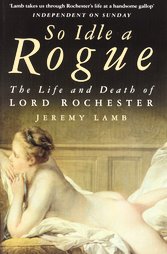
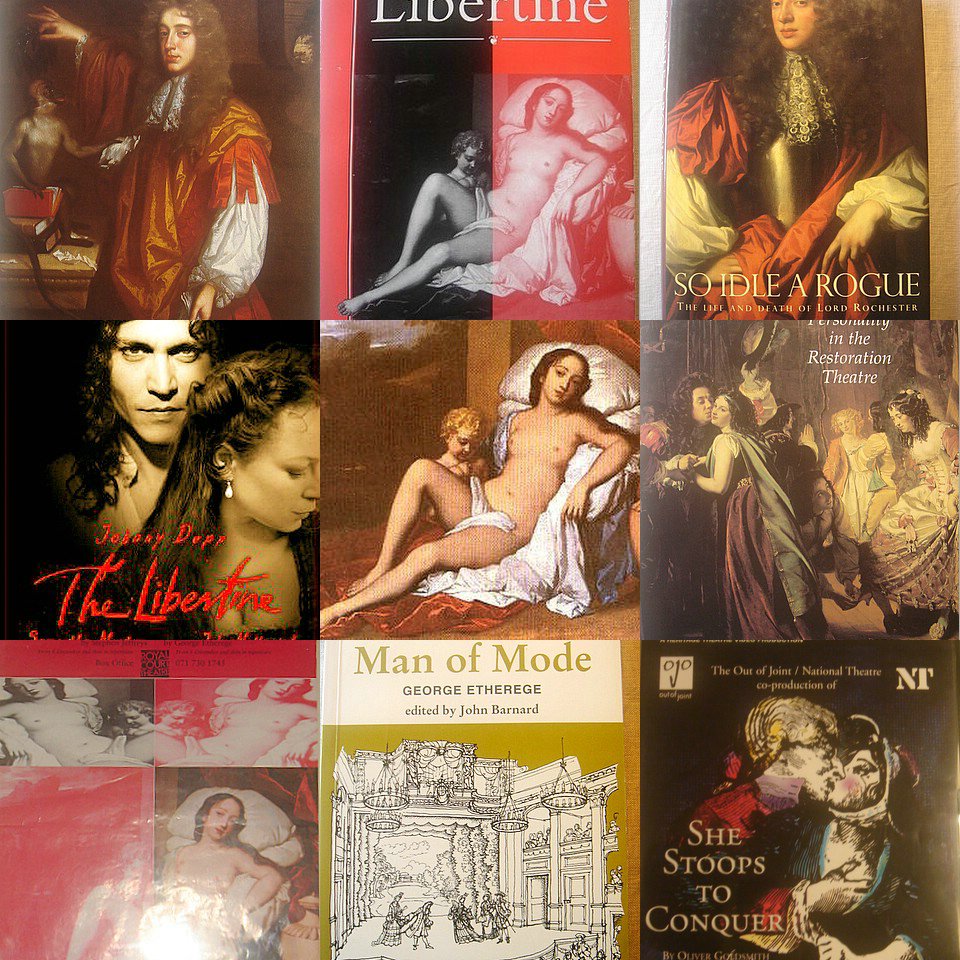
I finally finished re-reading Jeremy Lamb 's biography "So Idle a Rogue - the life and death of Lord Rochester" then; I read Stephen Jeffrey's original play "The Libertine" (which I had seen in the Royal Court in 1995, in a double-whamming program, together with George Etherege 's "The Man of Mode" ); I speed-read the "The Man of Mode" itself (also acquired in Sloane Square in the last century); I managed to find among my books Anthony Master's "The Play of Personality in the Restoration Theatre" bought ten years ago in a Portobello second hand bookshop; and, as a final flourish, I convinced Malinka to have as a post-dinner DVD-viewing "She Stoops to Conquer", a theatrical performance of Oliver Goldsmith's play that resuscitates most of the flair of a Restoration Comedy.

For the benefit of the Right Honourable Reader this blogger of yours intends, in a forthcoming blogtext, to share generously the thoughts and comments evoked by this 10-hours total immersion exercise.
As an appetizer I'll drop a Catullus' quote that could very well resume the moral choices of a libertine:
Odi et amo: quare id faciam, fortasse requiris
Nescio, sed fieri sentio et excrucior
(I hate and I love: why I do so you may well ask
I do not know, but I feel it happen and am in agony)

Gato Barbieri


Cuban-jazz concert near Princesa (awesome!) ...
 Posted by Picasa

Pierre-Joseph Proudhon


"La proprété c'est le vol!"


social housing arrangements in calle Velazquez...
 Posted by Picasa