Wednesday, November 02, 2005

Thursday, October 27, 2005

Alfonso Alaya


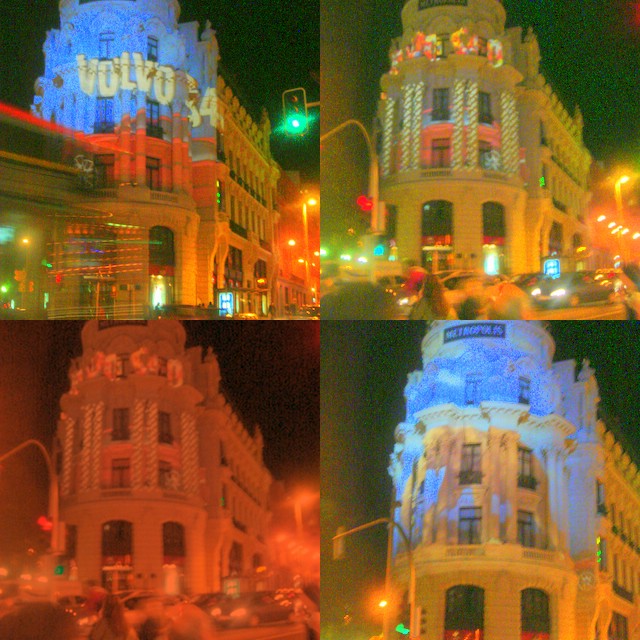
Volvo's creative advertising in the Gran Via Posted by Picasa

Maria Guerrero


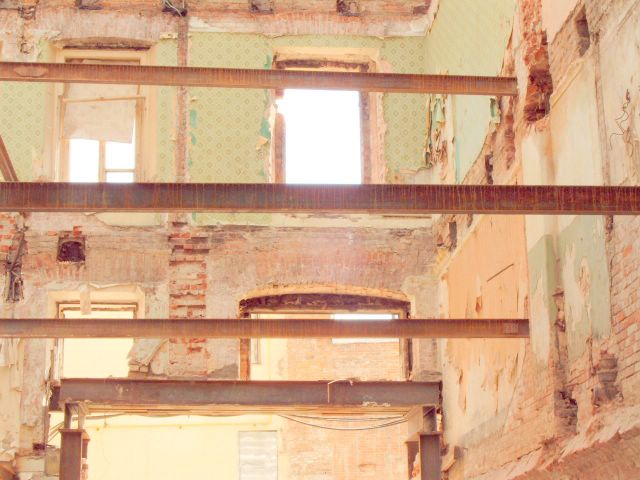
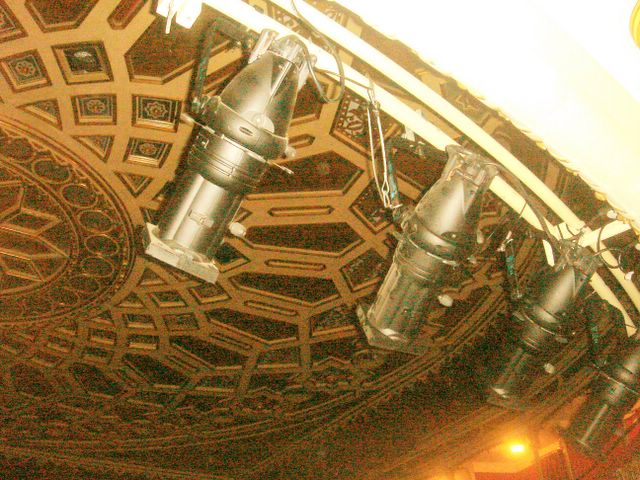
The ceilings of the Teatro María Guerrero Posted by Picasa

William Shakespeare

Male acting female roles ...


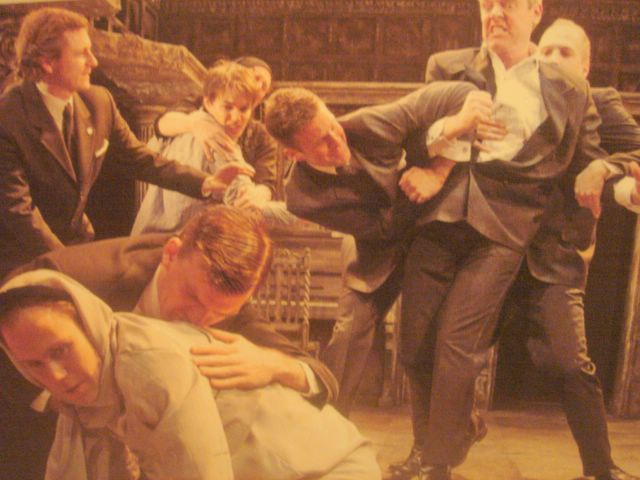
Edward Hall's production of William Shakespeare's "The Winter's Tale" Posted by Picasa


An invitation to dinner from the Crusader is something one does not refuse unless there's a very solid previous engagement, a Minister in town or an unpostponable rendez-vous. I had tickets for "The Winter's Tale" at Centro Dramático Nacional - Teatro María Guerrero, but since it was scheduled to begin at 7 p.m. and MDT (Madrid Dining Time) in Winter is 9.30 p.m. I though I had a fighting chance to see if not all at least most of the play.

In fact I just managed to see the Acts I to III, which is mostly grim and grey .(After the interval, the last three acts, which take place sixteen years later have a redeeming tone and there's a near holywoodesque happy end).

To refresh the memory of the Honourabble Reader those run-for-your-Prozac first three Acts can be synopsized like this:


When Leontes' (King of Sicily) old friend Polixenes (King of Bohemia) wishes to leave after a court visit, Leontes asks his wife, Hermione, to try persuading him to stay longer. Hermione succeeds, but Leontes then suspects her of having an affair with Polixenes. His jealousy getting the better of him, Leontes plots to poison Polixenes. Hermione is thrown in jail and brought to trial for adultery despite the words of the Delphic oracle (who has proclaimed Hermione innocent). While imprisoned, Hermione gives birth to a daughter, which Leontes promptly disowns. He also commands A. to abandon the baby in the desert.
Tragedy soon besets Leontes as the trial progresses. His only son dies from grief over his mother's predicament. Hermione too is reported dead. This is enough to make even Leontes realize what his jealousy has cost him (...)

Depressing stuff, no?

To add pain to injury the Propeller Company, directed by Edward Hall, sticks to a as- close-as-possible-to-how-it-was-done-in-Shakespeare's-time concept , and so we had an all-male distribution. It's a bit like transposing to Theater the fashionable playing of Ancient Music in original XVII century instruments. We all remember recent films where the action is set in Shakespearian times and where this gender-crossing thing is put to good dramatic use ( a man-actor and a woman-actor (needing to disguise as a man) both competing for the same female role; a woman-actor who has to disguise as a man to perform a male role.. O dear!, we've been there lots of times). As long as the director sticks to 1610's clothes and Elizabethan theatre codes the all-male cast can be swallowed ( although it's politicallyyoffensive to the hard-fought for rights of women to be on stage). But when, as it was the case yesterday, the action is set in a contemporary set with actors dressing in modern clothes, including suits and ties, the akwardness of men performing the roles of Hermione, Perdita, Pauline or Emilia becomes, to my taste, unbearable. I didn't get in what sense are we close to Shakespeare's original spirit. Was Uncle Willie writing with certain male actors in mind when creating the lines for his female characters, or was he not hoping that one day the lifting of the ban on female acting would enable the full potential of Juliets, or Hermiones or Rosalinds to shine through?

If it's to enact modern day versions of Shakespeare's plays does not an all male company incur the risk of being a gayish thing? Or is it homophobic to wanting a lovely innocent non-adulterous loving wife to be performed by a lovely innocent loving non-adulterous looking actress? At least, thank Goodness, we were spared falsetto voices, or it would have been a very camp thing indeed. The actors playing Hermione or Pauline were very good, not doubt about it, and, I'll give you that too, they were not trying to be "girls" but men-actors performing female roles. In the end, even if I don't doubt the artistic integrity of Company Director Edward Hall, it all sort of becomes a gimmick to flag up these particular productions of Shakespeare's work among the hundreds that leave the UK production line every year.

When one goes to see "The Winter's Tale" one wants to refresh one's ideas about how to deal with jealousy, both in oneself and in a third party . The BootsGirl pretends my blog makes her jealous and I was hoping for something in the Leontes-Hermione relationship that would have allowed me to be clever by half and enlightened her on the traps and punishments of jealousy. Most of the time I was instead frantically arguing, in mute mode, with the play's director about the incongruity of using men to perform as women.

Don't get me wrong: the mise-en-scène was first rate, the acting was good to very good to periods of brilliance (specially Adam Levy as Pauline and Simon Scardifield as Hermione!) and it was a memorable half-night.

And the Honourable Reader will excuse my outburst but it's bliss indeed to attend English-spoken theatre...

Wednesday, October 26, 2005

Federico Fellini

(strip) Teasing the Good Society...


innocent pleasures... Posted by Picasa


From time to time this blogger of yours has to face a difficult moral dilemma. Where should his loyalty stand? Towards the Honourable Reader or towards the Trustful Host? If one witnesses excellent blog material should one go ahead and post it, irrespective of the sacred laws of hospitality and good manners? The Honourable Reader shouldn't worry, this blog will not go tabloid. There are principles of privacy preservation that this blogger would not infringe. ( And that explains why the live characters of these stories never have their real names splashed in this blogspot domain).

(I had my Sony-Cybershot with me all the time but I didn't felt it would be proper to use it. The photo depicted above is a re-crop from a shot published in the photo-album "People" which carried material from Moscow night life in October 2003. )

Crucial here was getting the authorization from the Host to publish anything on the party's épater-le-petit-bourgeois event.. Armed with that green light and after careful camouflaging places and names, there we go:
La Frankeniathimifolia enticed me with promises of a wild party. Wild, I said to myself with a condescending smile, in this city, where you are even more strict on society's tie-wearing dinner parties than in St James's or Pall Mall? Wild, when the idea of outrageous is a copy-cat translation of a bad Almodovar film? Why has great unconventional fun become synonym with eye-offending colours and trans-gender orientation? Couldn't we have a bit "La Dolce Vita" parties returning, with glamour and healthy heterosexual decadence? Is it asking too much? Well, I'm glad to tell the Honourable Reader that we were quite near Uncle Federico's standards... and in downtown Madrid.
It all started very much as it's expected in a non-weekend dinner party in the Ciudad. Even punctuality was honourably upheld. (Although I must confess that I arrived 48 minutes late due to the disorientation of the GPS equipped navigational device in a city where roadworks are two a block). The mix of people was good, with the Arts and the Professions, Spaniards and non-Spaniards, Tight-assed and Porro-smokers, jeans-wearing straightforwards and elaborate fashionistas all in very balanced proportions. Good also the caipirotchkii (yes, the plural of caipirothcka is not an easy one, both in grammar and in the drinking life). Familiar faces. Familiar female faces from a blurred private soap-opera, which a bachelor's life always turns into.
The dinner was amazingly good considering the extremely short 48-hours notice. I thought they didn't do hostesses made of this strong stuff anymore, but I was proved wrong. (I said so to Frankeniathimifolia and it seemed to me that in her smiling reply she was submitting a CV for a well-rewarded job).
Early in the night, one or two friends, in the know about this blog, poked me into www-immortalizing the party. I replied that I needed one good story moment, a party in itself not being blogabble just like that. Otter, my dear long-time-no-see Otter, remarked: "You're going to have your moment, don't worry. Not sure if will be to everybody's liking.. but that's a different story". I caught her by the elbow, and tried to extract some more information from her with promises of gardens of delights ... but to no avail.
So, we sailed through, from the well-garnished tables to the veranda smoking-room, from the nikkydesaintfallesque sofas to the italianate classical chairs, from the Warhol pictures to the pop-art video-installations.
Pudding time arrived and went, and then a surprise was announced. We were asked to sit wherever we could find a place, and that meant floor included, and then the music started. (Not immediately but after some expert fixing from the iberoamerican waiter ("Man of my life! Been more than 13 years with me!"). Very loud, very syncopated musi.. suspense was building up... and then Sonia arrived. Slav-looking, wearing college girl standard outfit. Ultra-mini-skirt of Scottish clan pattern, white shirt generously buttoned off, tresses, knee-lengtht socks.. and stilettos (!). We all realized then what was going to happen. Either the distant bacteria-free pattern or the lap-dancing, in your face, type was all that needed confirmation. The music went on, the tresses got undone, a guest (my companion from diplowork as a matter of fact) was left standing so that a chair was added to the show. Another guest was asked to the improvised stage (some of us, male peeping-toms, felt uncomfortable and simultaneously relieved that we had avoided being the compère in the erotic performance. The skirt opened quite easily, as expected.. off the shirt went.. a multicoloured glass-beaded bra seemed to betray a large silicone implants zone. A few minutes later we confirmed our first wild guess. At this juncture, the Teddy-Bear, seated next to me, with a tone of alarm in her youthful voice whispered: "But... is this suppose to end up as an...Orgy?". I reassured her. One thing is to expand the boundaries of society entertainment another is to cut oneself from the social world. The strip-titillation continued, involving cream rubbing of the D-size fake boobs and whisky spilling on very much the same area. As it came to its end, the strip that is, with full frontal pubic nudity, the "Man of My Life" Ecuadorian waiter accidentally kicked the whisky glass that was lying on the floor. "There goes the mammary lubricant", I thought for myself. And that was it.
A murmur at first turned quickly into some loud buzz. Everybody was trying to be more man-of-the-world or experienced-lady than his/her neighbour. I smiled and gave the thumbs up to the organizer of our soirée who was looking my way. Got her point perfectly. To shake this self-smiling bourgeois fauna out of their very squared certainties. An innocent pleasure. To tease them just a little.
Tuesday, October 25, 2005

Viktor Erofeev


Moscow photographic nostalgia Posted by Picasa

Alvaro Siza Vieira


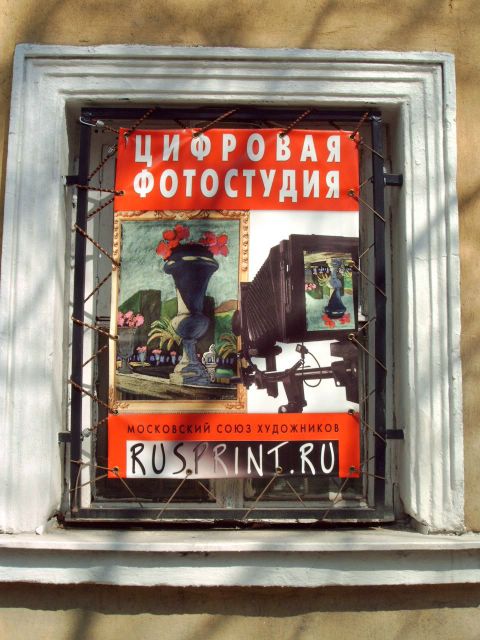
old houses never die.. Posted by Picasa


(Nota bene: every photo included in the "blog-cybershots" sub-series were taken by this blogger of yours on a SONY Cyber-shot digital camera.)

Monday, October 24, 2005

Pierre Corneuille III

Clarice or Lucrèce?...


illicit photography taken during the performance of "Le Menteur" Posted by Picasa


( It's thrilling to take a snap shot at the stage while a performance is going on, flash turned off... only the infra-red beam might get me into trouble... DVD-pirating as the next step? )

Paris Hilton

Is this what shopping is all about?...


a shop-window in a posh area of Madrid.. Posted by Picasa


( Always carry a micro digital camera with you when going out to buy yourself the FT Weekend at the usual quiosk in Calle Serrano)

Pierre Corneuille II


Actors thanking applauses at the Teatro de la Zarzuela Posted by Picasa


(I was hoping that I had managed to post a small cybershot-videofilm, but it looks i still have some homework to do..)

Thursday, October 20, 2005

Jean-Lois Benoit

A bar-hopping "Le Menteur"...


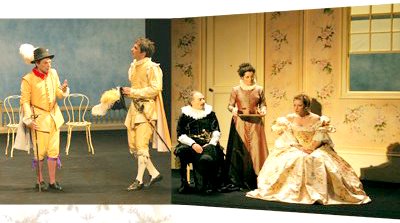
The Jean-Louis Benoît's mise-en-scène of "Le Menteur" Posted by Picasa


JulSoup thought (for herself) that to see this blogger of yours three times on the same week would be too much. The Winged-One, with perfect psychological balance, managed to decline without hurting any feelings. Inviting the Pinky Samosagoan didn't crossed my mind, her knowledge of French for a night at the visiting Comédie Française possibly not up to needs. And then the obvious choice crossed my mind: ClaireDeLune, the cute Franco-Spaniard I met a couple of months ago, who sells futons for a living. Surely, one whose professional worries are related with the comfort in bed would prove suitable for the bed manoeuvres of a XVII Century play? She agreed, smiling on the mobile phone, to meet me at the Zarzuela Theatre half an hour before the performance.
And that was how an innocent cultural trip turned into a dive in la noche madrileña. After dealing with "Le Menteur" and the lie-detector material of Dorante's hesitations between a blonde and a brunette (Clarice et Lucrèce) we could just have had a classical post-theatre supper (debriefing of respective evaluations, maybe some autobiographical bits invoked by Lucreces of yesteryears and more recent Clarices). In fact, we end up in a small group hopping from tapas bar to drinks bar, from drinks bar to club and from club to latenight club. Siestas and plenty of rest on a rainy Saturday and then, a couple of hours later, the carousel started all over again. More pre and after dinner drinks in a fashionable Moorish restaurant, more bars & clubs, with the night rushing to its end.
Nurturing my surprisingly mild hangover on Sunday, in bed, very late in the no longer morning, I kept wondering about what had I gained by my incursion into serious night-living... apart from keeping old reflexes of predatory smiles alive, I mean. Instant dopamine-mediated gratification driven by alcohol, the speeding tempo of dancing music and the sense of being witness to a secular tribal Mass? Socio-anthropological observation of the boy-meets-girl's patterns in a town where the seducing power seems to rest firmly in female hands? Speculation about how the night fauna of a given city might be an element on assessing the level of development of the respective society? (Comparisons involving the one and only night life of Moscow sprung to mind).
In the end a doubt persisted. How can one keep the motivation - at the respectable age of this blogger of yours - for an all-night outing? I realize then that to engage in this "voyage au bout de la nuit" week-end size I had to lie. To lie to others and to myself. To the smiling Clarice and to the hopeful Lucrece, or was it the other way around? Corneuille got it right in 1643, deception and lies are what you should expect when you are tempted by the twin beauties of the Place Royale. Youth and Passion, I mean.

Wednesday, October 19, 2005

Anna Akhmatova II


Beauty explains a lot...


Anna Akhmatova in 1899 in Sebastopol, then part of the Russian Empire, now Ukraine Posted by Picasa


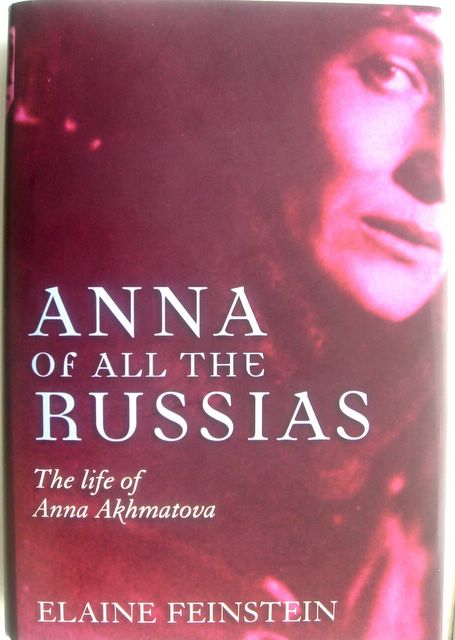
Every contemporary of Anna talks about how beautiful she was in the beginning of her womanhood. Unfortunately, we have the famous photo of 1922 (used in the cover of the biography by Elaine Feinstein), when she was already 33 years old, but not one of her "prime time", so to speak. As a ten years-old she was as stunningly beautiful as the photo above depicts.
We can only imagine how she must have been when almost everybody in bohemian Petersburg was falling in love with her...

Anna Andreevna Gorenko


Lost in translations...


The cover photo is of Ms. Akhmatova in 1922 Posted by Picasa


This biography of Anna Akhmatova, the great female poet of the Russian language, has been in my bedroom for the last couple of months. I read eagerly the first half when it's about immediate pre-revolutionary times, events around 1917 and the first decades of Revolution - and then I lost interest. Russia is a bit like that for me, and for many others as well. Fascinated to understand how Pushkin erupted in world literature, to stare in awe at the very existence of Tolstoy, to try hard to understand what Lenin (and Stalin too) was all about ... but afterwards the viagra-like qualities of Russianness are no longer there. Almost impossible to sustain one's sense of cultural and intellectual arousal when the grey soviet turn-offic reality takes over.
Against my principles I'm going to recommend a book without having read it to its last page. I have a good excuse this time, though. I've just returned from the Cí­rculo de Bellas Artes, a centenary and very active cultural institution of this city, where I have listened to Ms Elaine Feinstein herself, the biographer of Akhmatova and author of "Anna of All the Russias", published in London a couple of months ago.
Ms Feinstein is a poet herself, something I had no idea, and although British and influenced in her early relationship with poetry by the grand Americans such as Elliot and Pound, she confesses feeling now like descending from the Russian poetical tradition of determined women, like Tsvetaeva or Akhmatova. During the seminar she did not use words as such but I got the impression that this descendant of Russian Jews who migrated to England has, with Marina and Anna, "re-discovered" her Russian identity. (More and more we will have to accept with total normality that we carry not one identity (the national or nationalistic one) but an array of identities. The quicker we learn to be at ease with all of them, the better. Some of us refuse to aknowlege a proto-EuropeanUnion identity we now carry with us; others turn a blind eye to XV Century stains of "impure blood" in their lineage; many of us get emotional with former colonies' football national teams..).
Elaine Feinstein realized what Poetry means in Russia and how Poetry was essential in her life (and in the life of Marina Tsvetaeva). She assimilatedd the canon, so to speak, and became -althogh writing in English- a Russian poet herself.
Most of that late morning literary session at the Circulo, organized to commemorate a Spanish poet, ended up dedicated to the phenomenon of translation. (Ms Feinstein is a renowned translator of many Auntie Marina's poems). At some point both another translator who was in the panel and part of the audience were buying the concept that literary translation made by talented writers/poets is literary art itself (some went as far as saying it should be recognized as a separate literary "genre", for goodness' sake!). Well, it's the same old story as with academia texts and literary criticism. Those who write it would like to have a piece of the glory we attach to the "real thing", that is to the product of a creative writer or an original poet. But no way. The translator of Pushkin is not a Pushkin or a less-talented Pushkin but something else. He might even be a Pushkin himself but not as a translator of Pushkin. Did I made myself clear?
Who cares who did translate the poem written in 1917 by Anna Akhmatova starting with "Along the hard crust"?
Along the hard crust of deep snows,
To the secret, white house of yours,
So gentle and quiet - we both
Are walking, in silence half-lost.

And sweeter than all songs, sung ever,
Are this dream, becoming the truth,
Entwined twigs' a-nodding with favor,
The light ring of your silver spurs...